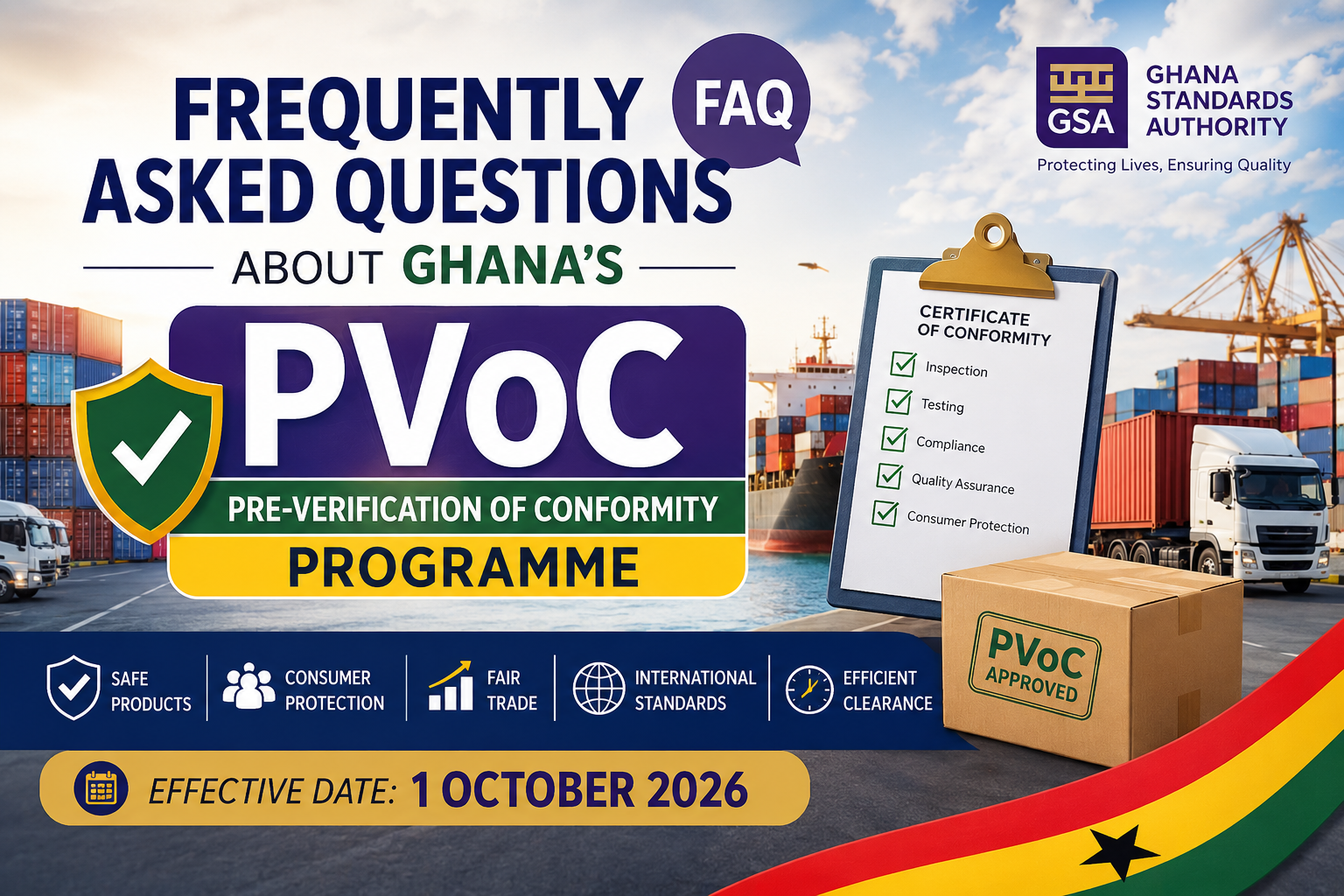
Frequently Asked Questions (FAQs) About Ghana's Pre-Verification of Conformity (PVoC) Programme
Get answers to the most common questions about Ghana's Pre-Verification of Conformity (PVoC) Programme, including Certificates of Conformity, inspections, compliance requirements, and what importers need to know before the programme takes effect on 1 October 2026.
Frequently Asked Questions (FAQs) About Ghana's Pre-Verification of Conformity (PVoC) Programme
Your Complete Guide to Ghana's New Import Quality Assurance Programme
Beginning 1 October 2026, Ghana will implement the Mandatory Pre-Verification of Conformity (PVoC) Programme, a major initiative by the Ghana Standards Authority (GSA) to ensure that regulated imported used vehicles meet Ghana's quality, safety, health and environmental standards before they are shipped to Ghana.
To help businesses understand the new requirements, 24HourBusiness.org has compiled answers to some of the most frequently asked questions.
1. What is PVoC?
PVoC stands for Pre-Verification of Conformity.
It is an international conformity assessment programme under which regulated products are inspected, tested and certified before they leave the exporting country.
The objective is to ensure imported products comply with Ghana Standards Authority (GSA) requirements before arriving at Ghana's ports.
2. Why is Ghana introducing PVoC?
The programme seeks to:
Protect consumers from unsafe products
Prevent counterfeit and substandard imports
Improve product quality
Promote fair competition
Facilitate international trade
Strengthen confidence in Ghana's marketplace
Align Ghana with international best practices in conformity assessment.
3. What does "Conformity" mean?
Conformity simply means:
A product complies with established technical, safety, quality and regulatory standards.
A conforming product has been verified to satisfy the required specifications before shipment.
4. What products will be affected?
PVoC generally applies to regulated imported products identified by the Ghana Standards Authority.
These may include:
Electrical and electronic products
Building materials
Industrial equipment
Motor vehicle components
Consumer goods
Chemicals
Agricultural products
Machinery
Household appliances
GSA will publish the official list of regulated products and implementation guidelines.
5. Does PVoC apply to every imported product?
No.
Only products designated under the programme will require Pre-Verification of Conformity.
Some products may be exempt depending on the regulations.
6. What is a Certificate of Conformity (CoC)?
A Certificate of Conformity (CoC) is an official document confirming that inspected products comply with Ghana's applicable standards.
It becomes one of the key documents required during customs clearance.
Without a valid CoC, regulated products may face additional inspection, delays or other regulatory action.
7. Who applies for the Certificate of Conformity?
Normally:
the exporter,
manufacturer,
supplier, or
authorised importer
initiates the application before shipment.
The products are then inspected and tested where required.
8. When is the inspection carried out?
Inspection takes place before shipment in the exporting country.
This is why it is called Pre-Verification.
9. Who performs the inspection?
Inspection is carried out through the conformity assessment arrangements approved by the Ghana Standards Authority under the PVoC Programme. The operational framework is overseen by GSA.
10. Will PVoC increase the cost of imports?
There may be compliance and certification costs associated with inspection and testing.
However, supporters of the programme argue that these costs are outweighed by benefits such as:
fewer rejected shipments,
improved product quality,
faster clearance,
reduced counterfeit goods,
enhanced consumer confidence.
11. What happens if goods fail inspection?
If products do not comply with Ghana's standards:
a Certificate of Conformity may not be issued;
corrective action may be required;
the shipment could be delayed until compliance requirements are satisfied.
12. Will customs still inspect shipments?
Yes.
PVoC does not replace Customs.
Customs authorities will continue to carry out their statutory responsibilities, while PVoC serves as a quality assurance mechanism before shipment.
PVoC simply becomes one of the compliance requirements supporting customs clearance.
14. Is PVoC the same as Vehicle Homologation?
No.
They are two completely different systems.
PVoC
Homologation
Applies to many regulated imported products
Applies specifically to vehicle models
Verifies products before shipment
Approves vehicle models before importation
Requires a Certificate of Conformity
Requires a Homologation Approval
Product-based
Vehicle model-based
Vehicle homologation forms part of Ghana's automotive regulatory reforms, while PVoC has a broader application across multiple product categories.
15. Will used vehicles require PVoC?
Vehicle imports are subject to their own regulatory requirements, including vehicle standards and homologation. Importers should follow the guidance issued by the Ghana Standards Authority for the specific category of vehicle being imported.
16. Who will be affected?
The programme affects:
Importers
Exporters
Manufacturers
Freight Forwarders
Customs House Agents
Shipping Companies
Logistics Providers
Retailers
Distributors
17. When does the programme start?
The Mandatory PVoC Programme is scheduled to take effect on 1 October 2026.
18. What are the benefits to Ghana?
Expected benefits include:
Safer imported products
Better consumer protection
Reduced counterfeit goods
Higher product quality
Improved trade facilitation
Increased investor confidence
Support for industrial development
Stronger compliance with international standards
19. What should importers do now?
Businesses should:
Familiarise themselves with the new requirements.
Review whether the products they import fall under the regulated list.
Engage overseas suppliers early to ensure compliance before shipment.
Follow updates and implementation guidelines issued by the Ghana Standards Authority.
Ensure all required documentation is in place before shipping goods.
20. Where can businesses obtain more information?
Importers and exporters should consult the Ghana Standards Authority for official operational guidelines, lists of regulated products and implementation procedures. GSA has also indicated its commitment to ongoing stakeholder engagement as the programme is rolled out.
Key Terms at a Glance
Term
Meaning
PVoC
Pre-Verification of Conformity
Conformity
Compliance with required standards
CoC
Certificate of Conformity
Pre-Shipment Inspection
Inspection before goods leave the exporting country
Disclaimer:
The views expressed on this site are those of the contributors or columnists, and do not necessarily reflect 24HourBusiness.com's position. 24HourBusiness.com will not be responsible or liable for any inaccurate or incorrect statements in the contributions or columns here.
The African Organisation for Standardisation (ARSO) and the Ghana Standards Authority (GSA) are advancing preparations for the 33rd ARSO General Assembly and Golden Jubilee Celebrations, which Ghana is expected to host in 2027. ARSO Secretary-General Dr. Hermogène Nsengimana met with GSA Director-General Prof. George Agyei and management to review preparations and strengthen collaboration ahead of the continental event.
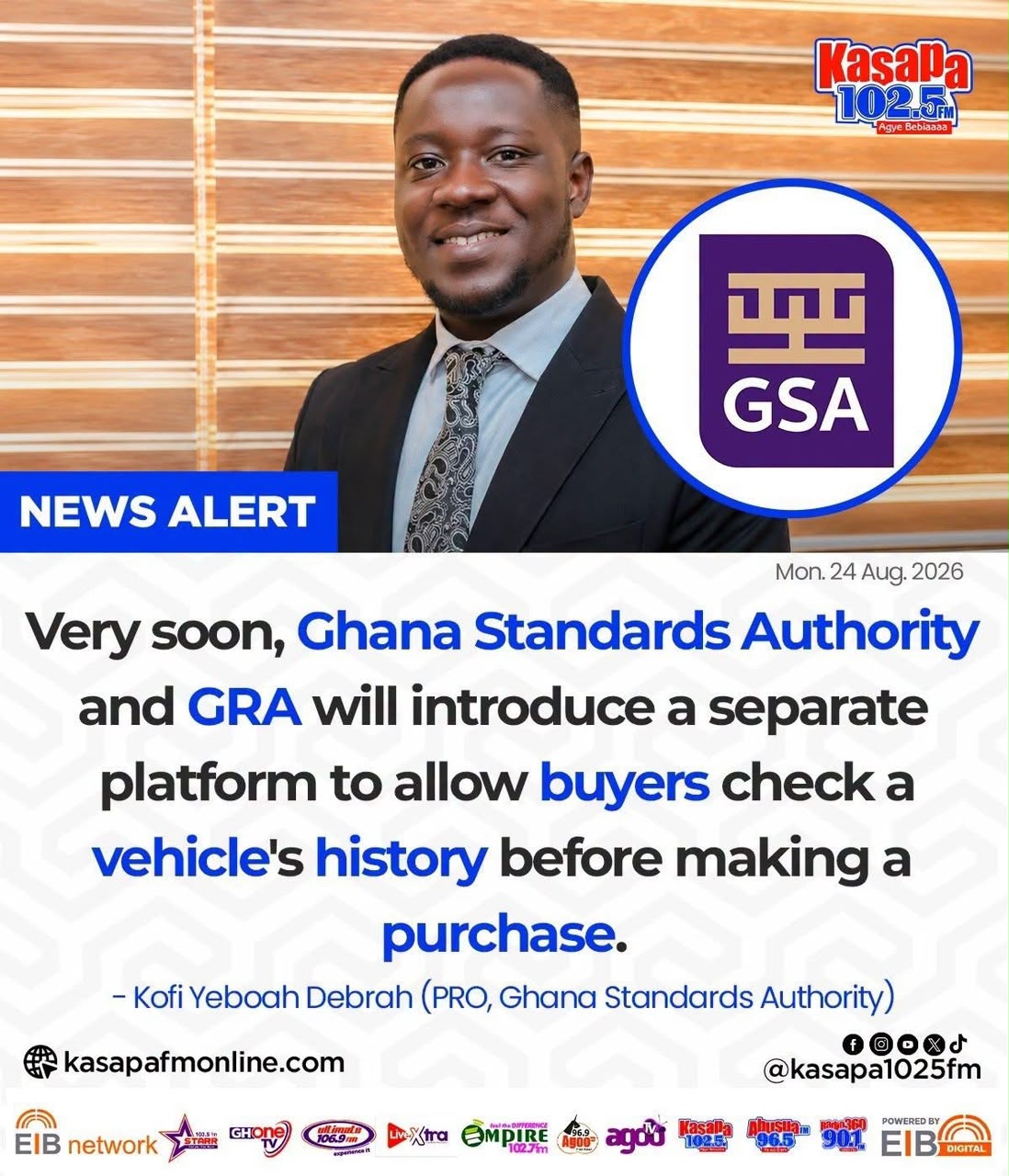
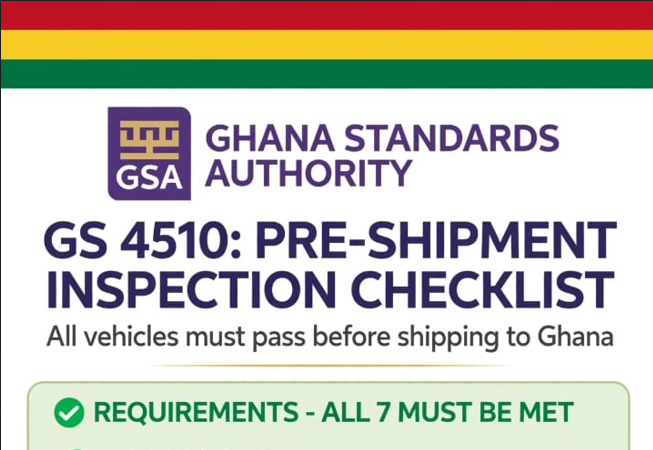
Recent reporting indicates that the new regime will place greater emphasis on pre-shipment inspection and conformity certification before vehicles enter Ghana.
The new enforcement regime is expected to reduce the entry of accident-damaged, flooded, burnt, excessively worn and otherwise unsafe vehicles into Ghana while creating a more transparent and level playing field for responsible importers and dealers.
Aug 20, 2026
340
Premium Industrial Header Ad Zone Space (Available for Placement)
 Export, Trade & Logistics