GCB Bank Overtakes Ecobank as Ghana’s Largest Bank by Deposit Market Share to GH¢334.3 billion
GCB Bank has overtaken Ecobank Ghana in deposit market share, emerging as Ghana’s largest deposit-taking bank as industry deposits rise to GH¢334.3 billion
GCB Bank Overtakes Ecobank as Ghana’s Largest Bank by Deposit Market Share
Ghana’s banking power map is changing, with GCB Bank emerging as the country’s largest deposit-taking bank by deposit market share, according to figures attributed to the latest PwC Ghana banking survey covering the 2025 financial year.
The development marks a significant shift in Ghana’s competitive banking landscape, particularly because Ecobank Ghana previously occupied the leading position.
The latest figures put GCB Bank at 12.37% of Ghana’s total deposit market, ahead of Ecobank Ghana at 10.52% and Stanbic Bank Ghana at 7.80%.
GCB moves to the top
The change becomes more significant when compared with the previous year.
In 2024, Ecobank Ghana held the largest deposit market share at 14.33%, while GCB Bank had 12.99%.
The latest figures therefore indicate that GCB has strengthened its position relative to its major competitors, while Ecobank's share of the industry deposit pool has declined.
Bank
2025 Deposit Market Share
GCB Bank
12.37%
Ecobank Ghana
10.52%
Stanbic Bank Ghana
7.80%
Ghana’s deposit market expands
The change in market leadership is taking place against the backdrop of substantial growth in Ghana’s banking industry.
Total industry deposits reportedly increased by approximately 25% to GH¢334.3 billion in 2025.
Based on its 12.37% market share, GCB Bank's share of the industry-wide deposit pool would be approximately GH¢41.3 billion.
This is an estimate based on the reported market share and total industry deposits, rather than a statement of GCB Bank's actual reported customer deposits.
Why the ranking matters
The significance of GCB's rise goes beyond a change in league-table positions.
For banks, deposits are a critical source of funding. A stronger deposit base can provide greater capacity to support lending, investment and other financial activities, subject to liquidity, capital, credit-risk and regulatory considerations.
The competition for deposits is therefore also a competition for:
Customers
Low-cost funding
Market share
Liquidity
Lending capacity
Digital banking relationships
Corporate and institutional accounts
Long-term financial influence
The shift also highlights how quickly Ghana's banking hierarchy can change when customer behaviour, pricing, service quality, digital adoption, corporate relationships and broader economic conditions move in favour of particular institutions.
GCB’s return to the top
GCB Bank's position is particularly noteworthy given the bank's history and its role as one of Ghana's most established financial institutions.
Its return to the top of the deposit-market ranking demonstrates the continued importance of scale and customer relationships in Ghana's banking sector.
For Ecobank Ghana, meanwhile, the figures represent a new competitive challenge. The bank remains one of Ghana's major financial institutions and part of the wider Ecobank pan-African banking network, but it now has to defend its position while competing against an increasingly strong GCB.
Stanbic Bank Ghana's 7.80% share also places it firmly among the country's leading deposit-taking institutions.
The bigger picture for Ghana’s banking industry
The most important story may therefore not be simply that GCB Bank has overtaken Ecobank.
The bigger story is that Ghana's banking hierarchy is becoming increasingly competitive.
As the overall deposit market expands, banks are competing for a larger pool of household savings, corporate deposits, institutional funds and digitally connected customers.
That competition is likely to increasingly be determined not only by branch networks, but also by digital banking capabilities, customer experience, interest rates, transaction ecosystems, corporate banking relationships, financial inclusion and the ability to retain customers over the long term.
GCB's rise to the top is consequently a useful indicator of a broader transformation underway in Ghana's financial sector.
GCB is back at the top. Ecobank now has a new target to reclaim.
Source
PwC Ghana's banking survey publications and Ghana banking-sector analysis. PwC's official publication page currently lists its banking survey as Ghana Banking Survey 2025.
Featured Image Concept: GCB Bank headquarters or banking image with a Ghana financial-market theme, featuring the headline “GCB Bank Takes the Lead.”
Disclaimer:
The views expressed on this site are those of the contributors or columnists, and do not necessarily reflect 24HourBusiness.com's position. 24HourBusiness.com will not be responsible or liable for any inaccurate or incorrect statements in the contributions or columns here.
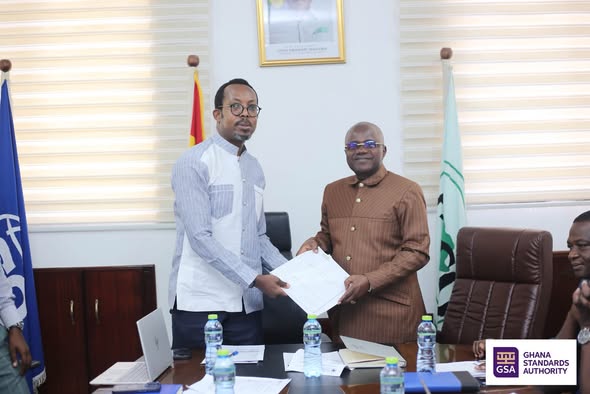
The African Organisation for Standardisation (ARSO) and the Ghana Standards Authority (GSA) are advancing preparations for the 33rd ARSO General Assembly and Golden Jubilee Celebrations, which Ghana is expected to host in 2027. ARSO Secretary-General Dr. Hermogène Nsengimana met with GSA Director-General Prof. George Agyei and management to review preparations and strengthen collaboration ahead of the continental event.
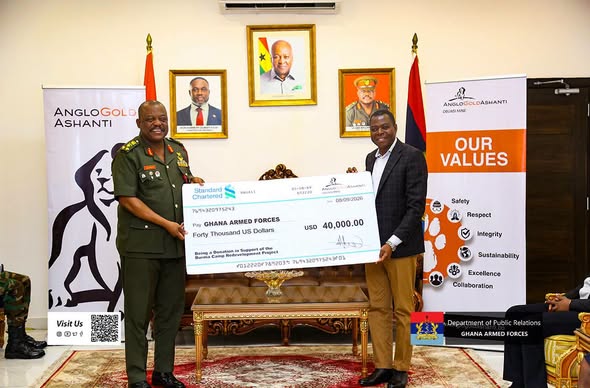
AngloGold Ashanti has donated GH¢445,000 to the Ghana Armed Forces to support the Burma Camp Redevelopment Project, an initiative aimed at addressing the military's longstanding accommodation deficit and improving living conditions for personnel. The donation was received by the Chief of the Defence Staff, Lt Gen William Agyapong, during a courtesy visit by an AngloGold Ashanti delegation
 Business & Finance