The modern CEO must make decisions in an environment defined by complexity, uncertainty, and speed.
This is where Business Intelligence (BI) has emerged as one of the most powerful strategic assets available to executive leadership.
By 24HourBusiness Editorial Team
In boardrooms across the world, one truth is becoming increasingly clear: the era of managing businesses based primarily on intuition is coming to an end.
Experience, instinct, and entrepreneurial vision remain invaluable qualities for every Chief Executive Officer. Many successful companies were built on bold decisions made without perfect information. However, today's business environment is fundamentally different. Markets shift overnight, customer preferences evolve rapidly, supply chains face constant disruption, and competitors leverage technology to move faster than ever before.
The modern CEO must make decisions in an environment defined by complexity, uncertainty, and speed.
This is where Business Intelligence (BI) has emerged as one of the most powerful strategic assets available to executive leadership.
Rather than replacing executive judgment, Business Intelligence strengthens it by transforming vast amounts of operational data into meaningful insights that support faster, smarter, and more confident decision-making.
The New Currency of Business Is Data
Every organization generates enormous volumes of information every day.
Sales teams capture customer interactions.
Finance departments process transactions.
Production facilities monitor manufacturing output.
Logistics systems track deliveries.
Human resource departments manage workforce performance.
Marketing platforms record customer engagement across multiple digital channels.
For many organizations, these valuable datasets remain isolated inside separate software systems, spreadsheets, or departmental reports. As a result, executives often struggle to obtain a complete picture of business performance.
Business Intelligence bridges these information gaps by integrating data from across the organization into a centralized analytical platform.
Instead of asking:
"What happened last month?"
Executives begin asking:
- Why did it happen?
- What is happening right now?
- What is likely to happen next?
- What actions should we take immediately?
That shift fundamentally changes the role of executive leadership—from reacting to events to actively shaping outcomes.
What Exactly Is Business Intelligence?
Business Intelligence is a collection of technologies, processes, and analytical tools that convert raw business data into meaningful information for decision-makers.
A modern BI platform typically connects multiple enterprise systems, including:
- Enterprise Resource Planning (ERP)
- Customer Relationship Management (CRM)
- Accounting and Finance Systems
- Inventory Management
- Manufacturing Systems
- Human Resource Management
- E-commerce Platforms
- Point-of-Sale Systems
- Supply Chain Applications
The data is consolidated, cleaned, analyzed, and presented through interactive dashboards, visual reports, scorecards, and predictive models.
For a CEO, this means replacing dozens of disconnected reports with a single, trusted source of business truth.
1. Replacing Lagging Indicators with Real-Time Executive Visibility
Traditional executive reporting has one major weakness—it is historical.
Monthly management accounts, quarterly board reports, and annual financial statements tell leaders what has already happened. While useful for compliance and governance, they rarely provide enough time to influence outcomes.
In today's competitive environment, waiting until month-end to discover declining sales or shrinking margins may already be too late.
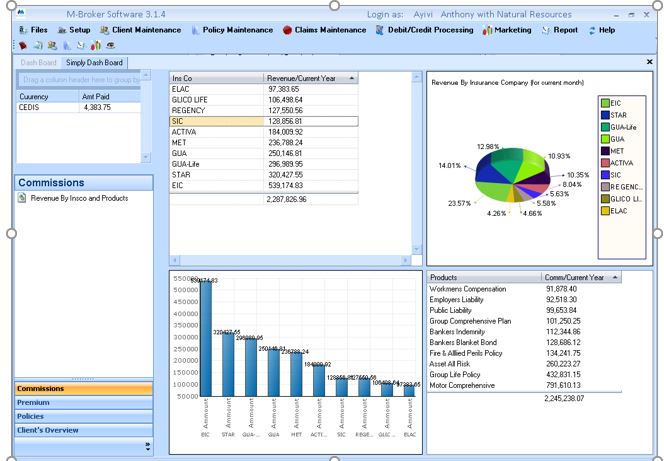
Business Intelligence provides executives with live operational visibility.
Instead of relying solely on periodic reports, CEOs can monitor key performance indicators (KPIs) as business activities occur.
Examples include:
- Daily revenue performance
- Sales conversion rates
- Customer acquisition costs
- Production efficiency
- Inventory turnover
- Cash flow position
- Gross profit margins
- Outstanding receivables
- Supplier performance
- Employee productivity
Imagine a manufacturer noticing a sudden increase in production defects. Rather than discovering the issue during the monthly quality review, a BI dashboard can alert management within hours, allowing corrective action before thousands of defective products reach customers.
This ability to identify issues early significantly reduces operational risk.
2. Moving from Reactive Management to Predictive Leadership
Perhaps the greatest advantage of Business Intelligence is its ability to look beyond historical reporting.
Modern BI platforms increasingly incorporate predictive analytics, machine learning, and statistical forecasting.
Instead of simply explaining yesterday's performance, they estimate tomorrow's possibilities.
Executives can simulate different business scenarios before committing resources.
For example:
- What happens if raw material costs increase by 15%?
- How would a weaker exchange rate affect profitability?
- Which customers are most likely to stop buying?
- Which products will experience increased demand next quarter?
- Which sales territories offer the highest growth potential?
Predictive models can also estimate important business metrics such as Customer Lifetime Value (CLV):
Customer Lifetime Value (CLV) = Average Order Value × Purchase Frequency × Customer Lifespan
Understanding these metrics enables CEOs to make investment decisions with greater confidence rather than relying on assumptions.
The result is more disciplined strategic planning and better allocation of corporate capital.
3. Eliminating Departmental Silos
One of the biggest challenges facing growing businesses is fragmented information.
Marketing reports one version of company performance.
Sales presents another.
Finance reports different numbers.
Operations maintains separate spreadsheets.
During executive meetings, valuable time is often spent debating which numbers are correct instead of discussing strategic priorities.
Business Intelligence solves this problem by creating what technology leaders call a Single Source of Truth.
All departments access the same verified data.
Everyone measures performance using common definitions and standardized KPIs.
This dramatically improves organizational alignment.
Instead of asking:
"Whose report is correct?"
Leadership can focus on:
"What actions should we take?"
The result is faster decisions, greater accountability, and improved collaboration across the enterprise.
4. Optimizing Capital Allocation
Every CEO faces the same challenge:
Resources are limited.
Capital, talent, equipment, and management attention must be allocated where they generate the highest return.
Business Intelligence enables executives to identify precisely where value is being created—and where it is being lost.
BI dashboards can reveal:
- Most profitable products
- Least profitable customers
- Highest-performing sales representatives
- Most efficient production lines
- Underutilized assets
- Cost-intensive operational processes
- Regional market performance
Instead of making investment decisions based on assumptions or organizational politics, CEOs can prioritize initiatives backed by measurable evidence.
Over time, these incremental improvements compound into substantial gains in profitability and shareholder value.
5. Strengthening Corporate Governance
Today's boards of directors expect more than intuition.
Investors, regulators, lenders, and shareholders increasingly demand transparent, evidence-based decision-making.
Business Intelligence improves governance by providing:
- Reliable audit trails
- Consistent reporting
- Regulatory compliance monitoring
- Performance accountability
- Risk visibility
- Executive scorecards
When board meetings are supported by accurate, real-time business intelligence rather than manually prepared spreadsheets, discussions become more strategic and productive.
6. Empowering CEOs During Economic Uncertainty
Economic volatility has become the new normal.
Businesses must navigate:
- Inflation
- Currency fluctuations
- Supply chain disruptions
- Rising energy costs
- Labour shortages
- Global geopolitical risks
- Rapid technological change
In uncertain environments, speed becomes a competitive advantage.
Companies that detect market shifts early can adapt faster than competitors.
Business Intelligence enables executives to identify changing trends before they become crises.
Whether adjusting pricing strategies, optimizing inventory, or reallocating investment budgets, leaders equipped with timely insights consistently outperform those relying solely on historical reports.
Business Intelligence and Ghana's 24-Hour Economy
As Ghana advances its 24-Hour Economy agenda, businesses are expected to become more productive, technology-driven, and globally competitive.
Organizations operating across multiple shifts require continuous visibility into their operations.
Business Intelligence supports this transformation by providing:
- Real-time production monitoring
- Shift performance analysis
- Energy consumption tracking
- Equipment utilization reporting
- Workforce productivity dashboards
- Inventory optimization
- Supply chain visibility
- Customer demand forecasting
- Financial performance monitoring
Manufacturers, exporters, logistics companies, agribusinesses, financial institutions, and retailers can all benefit from data-driven decision-making that supports round-the-clock operations.
Business Intelligence will play a central role in enabling Ghanaian enterprises to compete effectively within regional and international markets.
The Future CEO Is a Data-Driven Leader
The role of the Chief Executive Officer has evolved dramatically.
Today's CEOs are no longer expected to rely solely on experience or instinct. They are expected to combine strategic vision with analytical rigor.
Business Intelligence does not replace leadership—it enhances it.
It provides executives with the clarity to identify opportunities, the confidence to act decisively, and the evidence to justify strategic investments.
In an era where information moves faster than ever, organizations that harness data effectively will consistently outperform those that depend on guesswork.
The businesses that thrive in the coming decade will not necessarily be the largest or the oldest. They will be the ones that can transform information into insight—and insight into action.
For modern CEOs, Business Intelligence is no longer a competitive advantage. It is a business necessity.
About 24HourBusiness
24HourBusiness.org is Ghana's leading digital platform for business intelligence, manufacturing, technology, trade, entrepreneurship, investment, and enterprise development. Through expert analysis, practical insights, and industry-focused content, we equip business leaders with the knowledge they need to thrive in the emerging 24-hour economy.
 Business Knowledge Centre