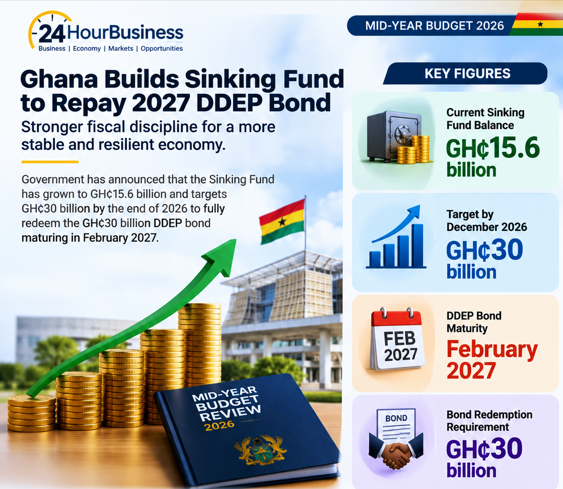
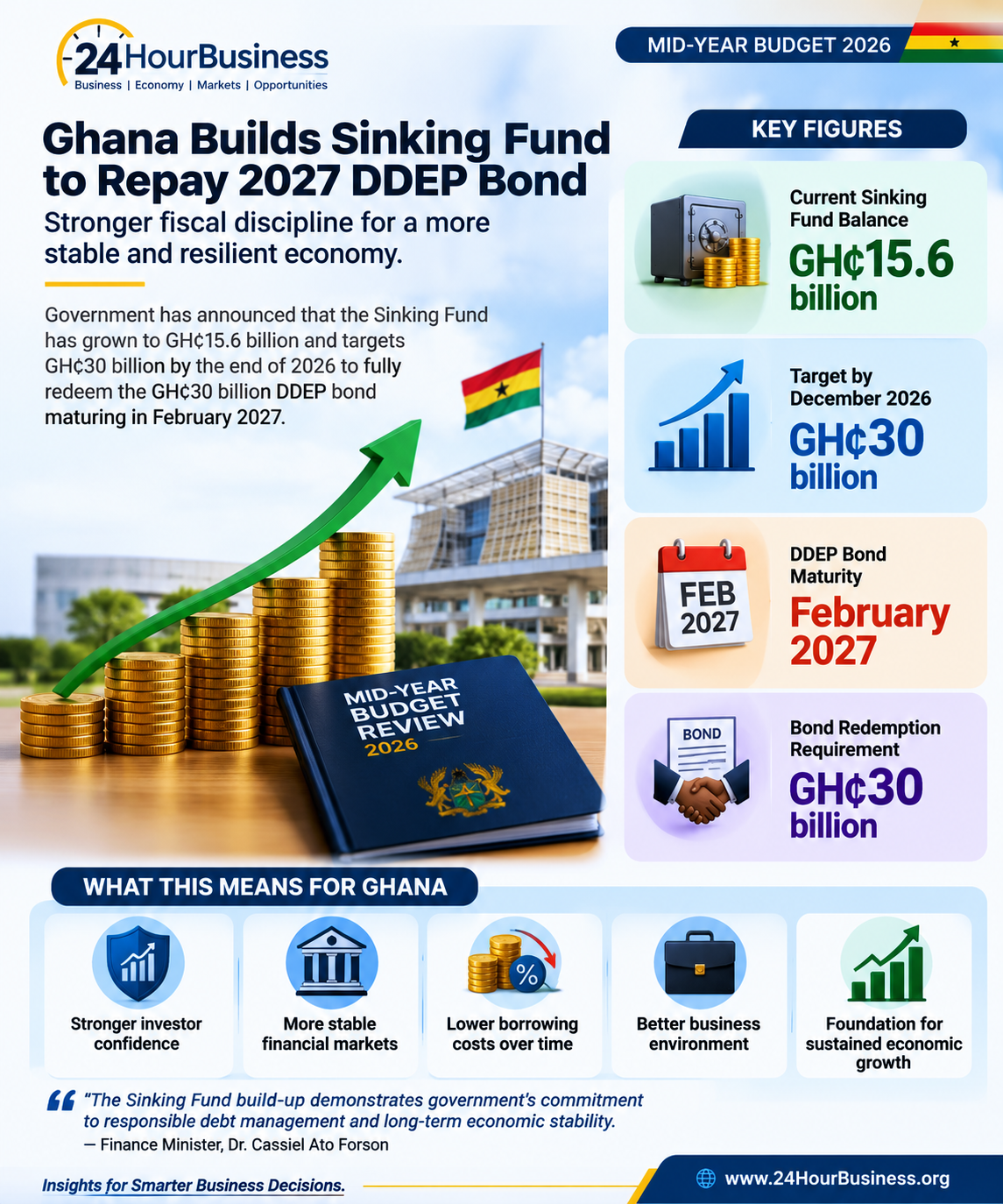
By setting aside dedicated resources ahead of the February 2027 bond maturity, the government is seeking to reassure investors that it has a credible repayment plan.
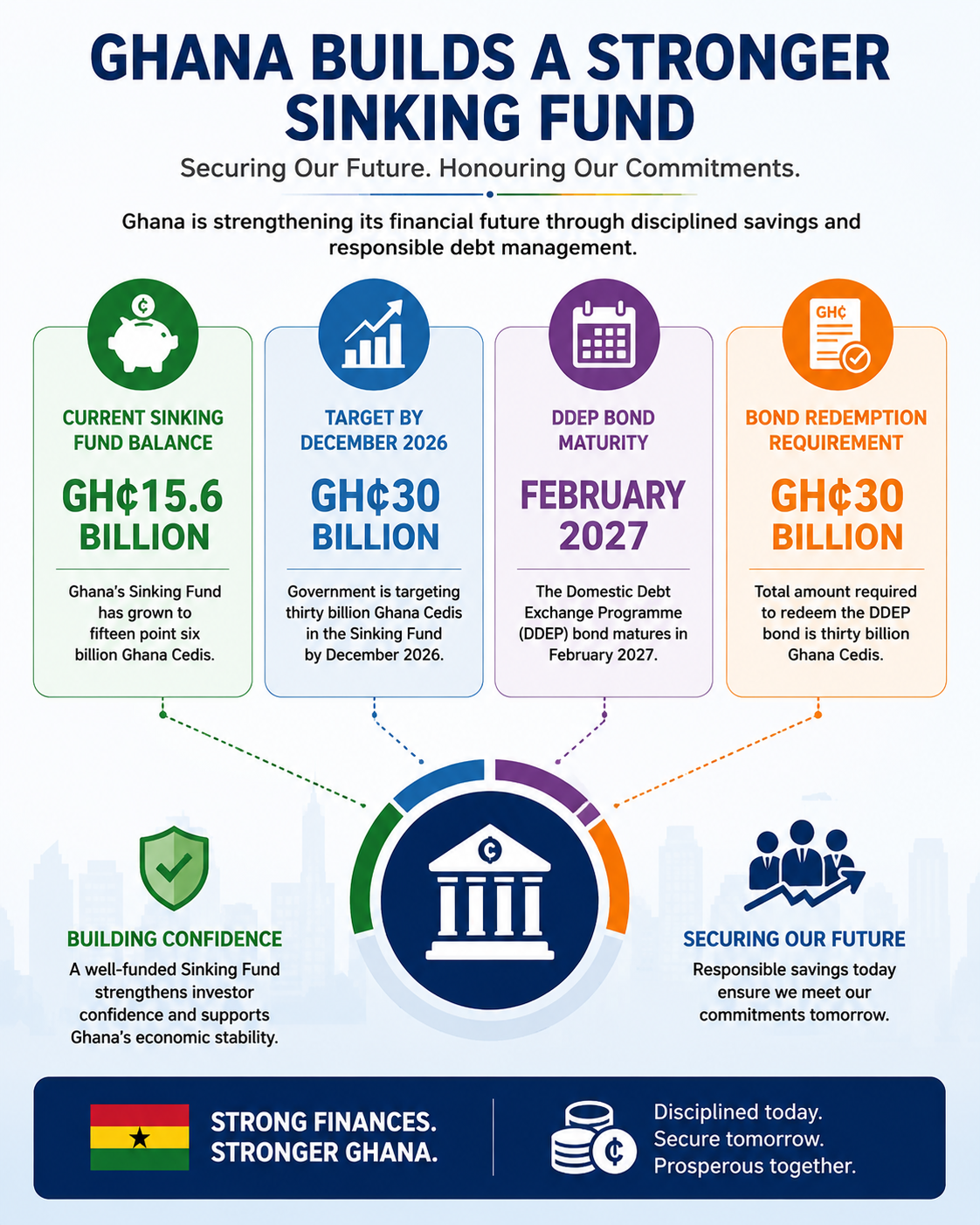
Accra, Ghana – The Government of Ghana's announcement that it intends to increase the country's Sinking Fund to GH¢30 billion by the end of 2026 is more than a debt management milestone. It is a significant signal to financial markets that the country is determined to restore confidence following the Domestic Debt Exchange Programme (DDEP).
If successfully implemented, the strategy could have far-reaching implications for banks, insurance companies, pension funds, businesses and the broader investment climate.
A Stronger Signal to Financial Markets
One of the biggest concerns following Ghana's debt restructuring was whether the government would be able to meet future debt obligations without creating additional fiscal pressure. By setting aside dedicated resources ahead of the February 2027 bond maturity, the government is seeking to reassure investors that it has a credible repayment plan.
A well-funded Sinking Fund reduces refinancing risk and demonstrates prudent financial planning—two factors that credit rating agencies and investors monitor closely.
What It Means for Banks
Commercial banks remain among the largest holders of government securities. A stronger repayment outlook improves the value and credibility of these investments, helping banks strengthen their balance sheets.
Greater confidence in government securities could also improve liquidity within the banking sector and support increased lending to businesses as economic conditions stabilise.
Positive News for Insurance Companies and Pension Funds
Insurance firms and pension fund managers invest substantial portions of their portfolios in government bonds because they offer relatively stable returns.
A credible repayment strategy helps protect these investments, safeguards policyholders' and pension contributors' funds, and enhances long-term financial stability across the insurance and pensions industries.
Better Business Confidence
Businesses generally thrive in stable economic environments. If investor confidence continues to improve, Ghana could experience:
- Lower government borrowing costs over time.
- Reduced pressure on domestic interest rates.
- Improved access to business financing.
- Greater foreign investor interest.
- Increased private sector investment.
These developments are particularly important for manufacturers, exporters, agribusinesses, logistics firms and SMEs seeking affordable capital to expand operations.
Challenges Remain
While the Sinking Fund represents an encouraging development, its success depends on sustained fiscal discipline and consistent revenue mobilisation. External factors such as global commodity prices, exchange rate movements and inflation will continue to influence Ghana's economic outlook.
Businesses will therefore be watching not only the size of the fund but also the government's ability to maintain macroeconomic stability over the coming months.
Outlook
The planned accumulation of GH¢30 billion in the Sinking Fund is one of the clearest indications yet that Ghana is prioritising responsible debt management as part of its economic recovery agenda.
If successfully achieved, it could strengthen investor confidence, improve financial sector stability and create a more favourable environment for business growth and long-term investment.
For Ghana's private sector, the message is clear: stronger public finances can provide the foundation for stronger private enterprise. The challenge now lies in translating fiscal discipline into sustained economic growth, job creation and increased competitiveness.
 Business & Finance