More Than 1.2 Million Containers Move Through Ghana Each Year — and Every Delay Has a Cost
When a container arrives at a Ghanaian port, its journey does not end at the quay.
Behind every container are an importer, exporter, manufacturer, retailer, transporter, financier, warehouse operator and ultimately, a consumer waiting for the goods inside.
That is why the warning from the Chief Executive Officer of the Ghana Shippers’ Authority (GSA), Prof. Ransford Van Gyampo, about delays in cargo clearance deserves attention far beyond the shipping and logistics industry.
Ghana handles more than 1.2 million containers annually. At that scale, even relatively small inefficiencies in the clearance process can translate into significant economic costs when multiplied across the entire trading system.
The GSA itself has described the new regulatory framework as a move towards a more transparent, cost-effective and accountable shipping and logistics environment.
The central issue is therefore not simply how quickly a container leaves the port.
It is how much the entire economy pays when that container does not leave on time.
A Container Never Arrives “Quietly”
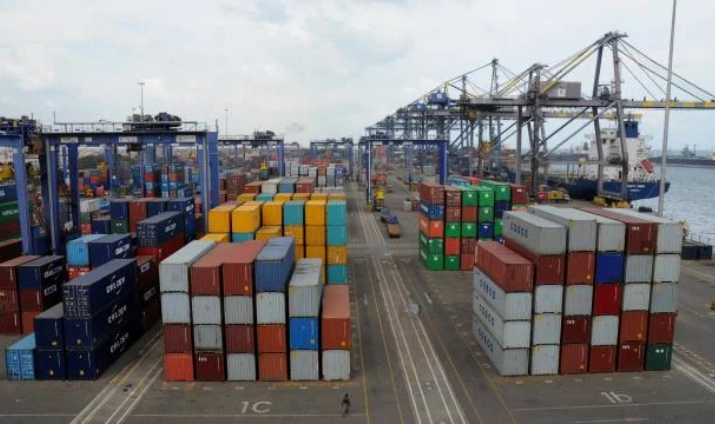
A container may appear to be a physical box arriving at Tema or Takoradi, but economically it represents a chain of financial commitments.
The importer may already have paid the overseas supplier.
A bank may have financed the transaction.
Insurance may have been purchased.
Freight may have been paid.
Port and terminal charges may be accumulating.
Trucks may be waiting.
Warehouses may have been booked.
Customers may already be expecting the goods.
And in many cases, the importer may already have borrowed working capital to finance the transaction.
When the clearance process is delayed, those costs do not simply stop.
They continue accumulating.
Depending on the circumstances, delays can generate storage charges, demurrage, financing costs, additional transport costs, inventory costs and lost business opportunities.
The container therefore becomes a cost-bearing asset while it waits.
That is the economic reality behind port efficiency.
When Systems Fail, Businesses Eventually Pass the Cost to Consumers
This is where a port and shipping issue becomes a national economic issue.
Suppose an importer brings in food products, spare parts, machinery, pharmaceuticals, construction materials or industrial inputs.
If clearance is delayed, the importer absorbs additional costs.
A business may initially try to absorb the increase.
But businesses cannot indefinitely operate below cost.
Eventually, some of those costs may be reflected in:
higher wholesale prices;
higher retail prices;
increased transport costs;
higher production costs;
reduced margins;
delayed investment;
reduced inventory;
or increased borrowing.
For a manufacturer, a delayed container could mean that a critical input does not arrive on time.
For a supermarket, it could mean a product is unavailable.
For a spare-parts dealer, it could mean a customer waits longer for a replacement part.
For a farmer or agro-processing company, a delayed input could affect production schedules.
And for the ordinary consumer, the consequence can simply be another increase in the price of goods.
The cost of inefficiency eventually travels through the supply chain.
That is why port efficiency should be viewed as part of Ghana's inflation and cost-of-living conversation.
Act 1122 Changes the Regulatory Equation
The passage of the Ghana Shippers’ Authority Act, 2024 (Act 1122) significantly changed the Authority's position in Ghana's shipping and logistics ecosystem.
The law transformed the GSA from a primarily advocacy-oriented institution into a regulator with stronger powers over commercial shipping activities.
Under the new framework, shipping service providers are required to submit proposed charges, fees and tariffs to the Authority for review and approval before implementation. The GSA has stated that this applies across relevant shipping and logistics service providers, including shipping lines, freight forwarders, terminal operators and clearing agents.
This is important because the question is no longer simply:
“What does a shipping or logistics company want to charge?”
The regulatory question becomes:
“Is the charge justified, transparent, commercially reasonable and consistent with the approved regulatory framework?”
The GSA has already demonstrated that it is using this mandate. Its published cargo-clearance tariff guidelines state that the Authority has engaged clearing agents, freight forwarders, the Ghana Ports and Harbours Authority and terminal operators to agree charges.
Regulation Is Not About Punishing Businesses
There is an important distinction here.
Effective regulation should not mean suppressing legitimate business charges or making it impossible for shipping companies, terminal operators, freight forwarders or other service providers to recover reasonable costs.
The objective should be predictability, transparency and fairness.
Businesses need to know what they are going to pay.
Service providers need to know the rules under which they operate.
Government needs to understand the economic consequences of those charges.
And consumers need an efficient supply chain.
The GSA itself has said that its regulatory role is intended to create an inclusive, transparent and cost-effective shipping and logistics environment rather than stifle legitimate commercial activity.
That balance will be crucial.
The Data Question
Perhaps the most important issue emerging from this debate is not the argument over individual charges.
It is data.
If Ghana wants to become a serious logistics and trading hub, it must know exactly where time and money are being lost in the cargo-clearance process.
Consider the information that should be available for every container:
When did it arrive?
When was its documentation submitted?
When was customs processing initiated?
When was inspection conducted?
When were duties and taxes paid?
When was the release authorised?
When was the container physically released?
How long did it spend at each stage?
Which agency or process was responsible for each delay?
How much additional cost accumulated because of the delay?
Without such data, discussions about inefficiency can easily become arguments between competing interests.
With reliable data, Ghana can identify the bottlenecks.
That changes the conversation from:
“The ports are slow.”
to:
“The average clearance time increased by X hours at this particular stage, affecting X containers and generating an estimated X amount in additional cost.”
That is the kind of evidence-based regulation a modern trading economy requires.
Ghana Is Not Serving Only Ghana
There is another dimension that makes this issue strategically important.
Ghana's ports and transport corridors serve markets beyond Ghana.
Landlocked countries including Burkina Faso, Mali and Niger depend on coastal neighbours for access to international maritime trade.
The GSA has formal arrangements with shippers' councils in these countries to facilitate transit trade and improve the efficiency of the transport chain.
The scale is significant.
The GSA's January–September 2024 maritime trade review recorded 738,929 metric tonnes of transit trade involving Burkina Faso, Mali and Niger, representing a 55.3% increase over the comparable period in 2023.
This means Ghana's port efficiency is also a question of regional competitiveness.
If Ghana's corridor is efficient, transparent and competitively priced, Ghana can strengthen its position as a preferred gateway into the landlocked markets of the Sahel.
If it becomes unnecessarily expensive or unpredictable, cargo owners and traders have an economic incentive to explore alternative corridors.
The competition is therefore not merely between Ghanaian businesses.
It is between trade corridors.
The Bigger Message
Prof. Ransford Gyampo's intervention should therefore be understood within a much larger economic picture.
Ghana's ports are not simply places where containers arrive.
They are economic gateways.
Every hour saved in the clearance process can release working capital, improve inventory availability, reduce unnecessary charges and make Ghanaian businesses more competitive.
Conversely, every unnecessary delay can add another layer of cost to the supply chain.
With more than 1.2 million containers moving through Ghana annually, small inefficiencies can become large economic problems when multiplied across the system.
And because Ghana also wants to serve the markets of landlocked neighbours, the stakes extend beyond the domestic economy.
The question is ultimately one of competitiveness, fairness and accountability.
Ghana now has a stronger legal framework through Act 1122.
The next challenge is to make that framework work through better data, transparent charges, efficient systems, accountable service delivery and measurable reductions in clearance time and cost.
Because when the system works, businesses save.
When businesses save, prices can become more competitive.
And when the logistics system fails, the cost rarely remains at the port.
It eventually reaches the Ghanaian consumer.
24HOURBUSINESS.ORG VIEW
The debate over shipping charges and container delays should not be reduced to a confrontation between the regulator and private-sector operators.
It should be treated as a national productivity issue.
Ghana needs a port and logistics system where every charge has a justification, every delay has an explanation, every process has measurable performance data, and every responsible institution can be held accountable.
That is what modern trade regulation should deliver.
And that is what a truly functioning 24-hour economy will require.
 Export, Trade & Logistics