PVoC vs. Homologation: Understanding the Two Compliance Systems Shaping Ghana's Vehicle Import Industry
What is the difference between PVoC and Homologation? Learn how Ghana's new Pre-Verification of Conformity Programme differs from vehicle type approval and why both are important for importers, dealers, and consumers.
By 24HourBusiness.org
As Ghana prepares to implement the Mandatory Pre-Verification of Conformity (PVoC) Programme from 1 October 2026, many importers, vehicle dealers, freight forwarders, and consumers are asking an important question:
Although the two terms are often used interchangeably, they serve different purposes within international trade and the automotive industry. Understanding the distinction will help importers comply with Ghana's regulatory requirements while making informed purchasing decisions.
Two Different Systems with One Common Goal
Both PVoC and Homologation are designed to ensure products meet established standards. However, they focus on different aspects of compliance.
Simply put:
PVoC verifies that a specific product complies with Ghana's import requirements before shipment.
Homologation certifies that a vehicle model has been designed and manufactured to meet technical and safety regulations.
One focuses on the condition of an individual product, while the other focuses on the design approval of an entire vehicle model.
What is PVoC?
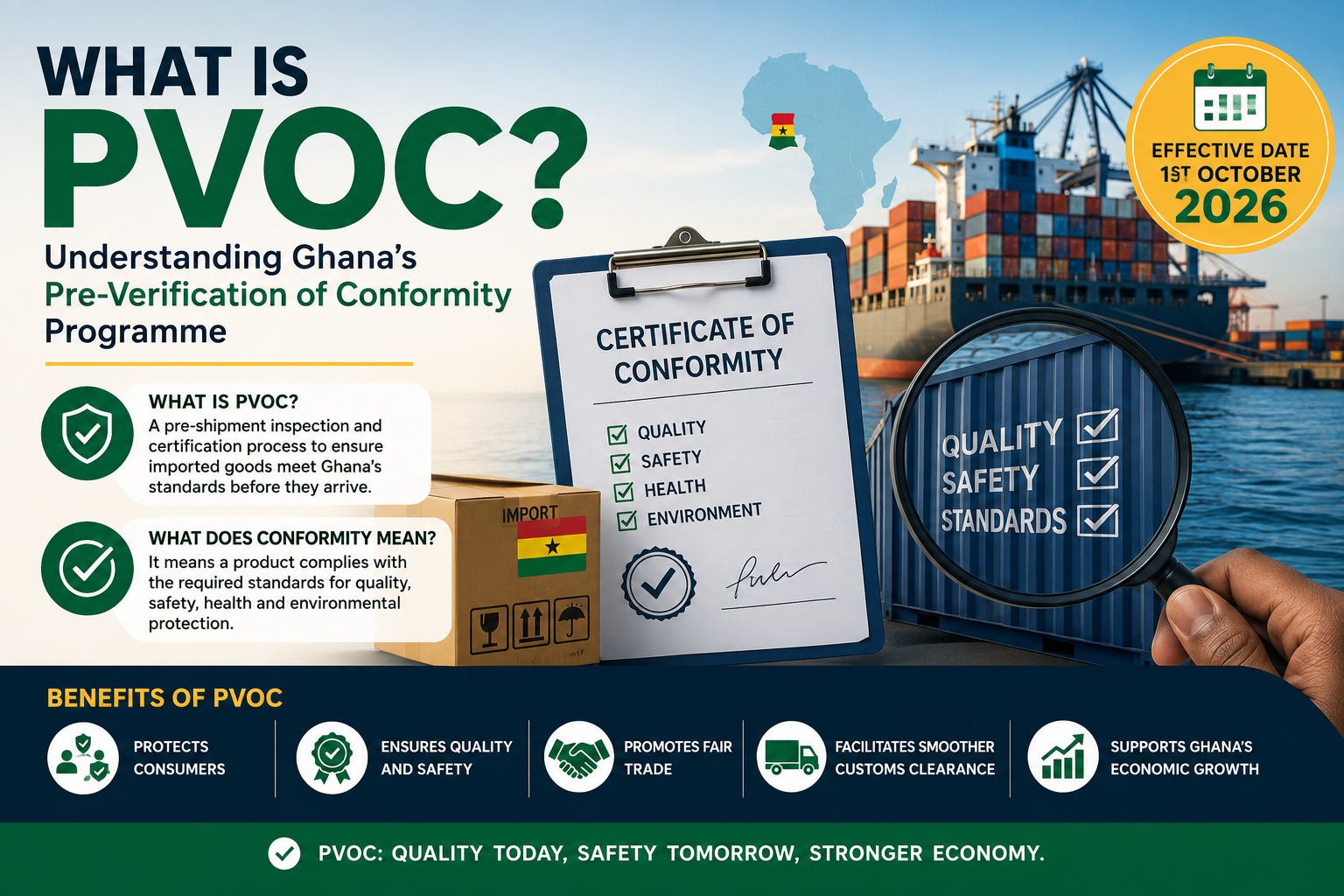
Pre-Verification of Conformity (PVoC) is an international conformity assessment programme carried out before regulated goods are exported to the importing country.
Under Ghana's new programme, selected imported products will undergo inspection, testing, and verification to confirm compliance with applicable national standards before shipment.
If the products satisfy the required standards, they are issued a Certificate of Conformity (CoC).
The programme covers a wide range of imported products, including:
Electrical appliances
Building materials
Chemicals
Agricultural inputs
Industrial equipment
Consumer goods
Certain categories of motor vehicles and automotive products, depending on the applicable regulations
The Objective
PVoC seeks to:
Protect consumers
Prevent substandard imports
Improve product quality
Support fair trade
Facilitate customs clearance
Strengthen confidence in Ghana's marketplace
What is Homologation?
Homologation, also known as Type Approval, is a technical certification process that confirms a vehicle model complies with prescribed engineering, safety, and environmental regulations before it is introduced into a market.
Rather than inspecting every individual vehicle, homologation evaluates the design and performance of an entire vehicle model.
Areas typically assessed include:
Brake systems
Steering performance
Lighting systems
Seat belts
Airbags
Vehicle dimensions
Crash protection
Exhaust emissions
Noise levels
Electronic safety systems
Once approved, that vehicle model is considered suitable for sale and registration within jurisdictions that recognise the approval.
The Key Difference
Imagine purchasing two identical vehicle models.
Although they were manufactured to the same specifications, one has been involved in an accident, while the other remains in excellent condition.
Both vehicles retain the manufacturer's original homologation because they belong to the same approved model.
However, only the vehicle that still meets the importing country's inspection requirements would successfully pass a PVoC inspection before export.
This illustrates the difference:
Homologation confirms how the vehicle was originally designed.
PVoC verifies the condition and conformity of the individual vehicle or product at the time of export.
Why Used Vehicles Require PVoC
This distinction becomes particularly important for used vehicle imports.
A manufacturer may have obtained homologation for a vehicle model years ago, but an individual used vehicle may have experienced:
Accident damage
Structural repairs
Mechanical deterioration
Excessive emissions
Odometer tampering
Missing safety equipment
Before export, inspectors evaluate whether the vehicle still complies with the importing country's applicable requirements.
This is why countries implementing PVoC programmes often require used vehicles to undergo inspection before shipment.
Why New Vehicles Are Different
Brand-new vehicles generally arrive with manufacturer approvals demonstrating that the vehicle model has already satisfied technical regulations through homologation.
Consequently, the emphasis is often on verifying documentation and compliance with applicable import requirements rather than conducting extensive inspections of every individual vehicle.
How the Two Systems Complement Each Other
Rather than competing, PVoC and Homologation work together to strengthen product safety and regulatory compliance.
Homologation asks:
"Was this vehicle model engineered to meet recognised safety and technical standards?"
PVoC asks:
"Does this particular vehicle or product comply with Ghana's import requirements before shipment?"
Together, they help ensure that both the design and the actual product being imported satisfy regulatory expectations.
Why This Matters for Ghana
As Ghana modernises its import quality assurance framework, understanding these two systems will become increasingly important for:
Vehicle importers
Automobile dealerships
Fleet operators
Freight forwarders
Customs agents
Logistics companies
Manufacturers
Insurance companies
Consumers
The implementation of the Mandatory PVoC Programme is expected to improve the quality of imported products entering Ghana while supporting consumer protection, fair trade, and international best practices.
For businesses involved in importing vehicles or regulated goods, early preparation and a clear understanding of compliance requirements will be essential to avoiding delays and ensuring smooth customs clearance.
PVoC vs. Homologation at a Glance
Feature
PVoC (Pre-Verification of Conformity)
Homologation (Type Approval)
Primary Purpose
Verifies that imported goods comply with Ghana's standards before shipment
Certifies that a vehicle model meets technical and safety regulations
Applies To
Regulated imported products
Vehicle models and certain automotive components
Inspection Focus
Individual shipment or product
Vehicle design and engineering
Timing
Before export
Before market approval
Main Outcome
Certificate of Conformity (CoC)
Type Approval / Homologation Certificate
Main Benefit
Prevents substandard imports
Ensures vehicles are designed to recognised safety standards
Business Insight
As Ghana implements the Mandatory PVoC Programme, compliance will become an integral part of international trade. Businesses that understand both PVoC and Homologation will be better positioned to manage imports efficiently, reduce regulatory risks, and maintain consumer confidence.
For the automotive industry, these systems are not alternatives—they are complementary safeguards that help ensure vehicles entering the Ghanaian market are both properly designed and fit for use.
Disclaimer:
The views expressed on this site are those of the contributors or columnists, and do not necessarily reflect 24HourBusiness.com's position. 24HourBusiness.com will not be responsible or liable for any inaccurate or incorrect statements in the contributions or columns here.
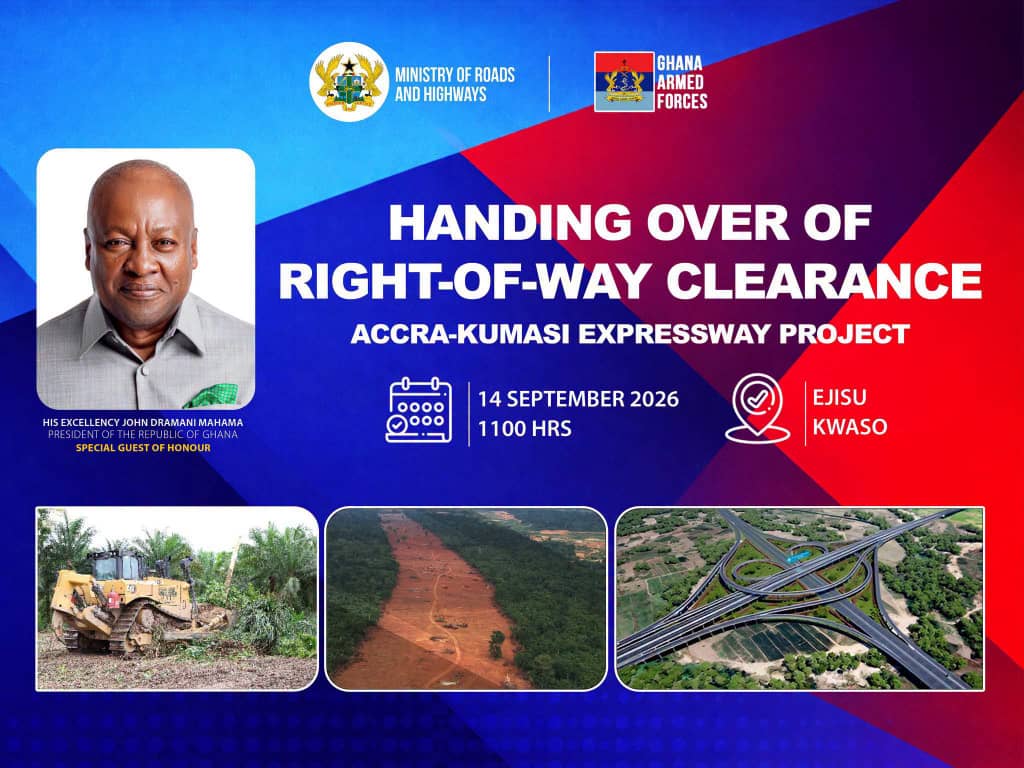
The Government of Ghana is set to formally hand over the cleared right-of-way for the Accra–Kumasi Expressway Project at Ejisu-Kwaso on 14 September 2026. The milestone is expected to pave the way for subsequent stages of the major road infrastructure project, which is aimed at improving connectivity, transportation efficiency and economic activity along the Accra–Kumasi corridor.
Ghana Armed Forces engineers have completed the 175.6km Accra–Kumasi Expressway right-of-way clearing in 19 weeks, marking a major infrastructure milestone for Ghana.
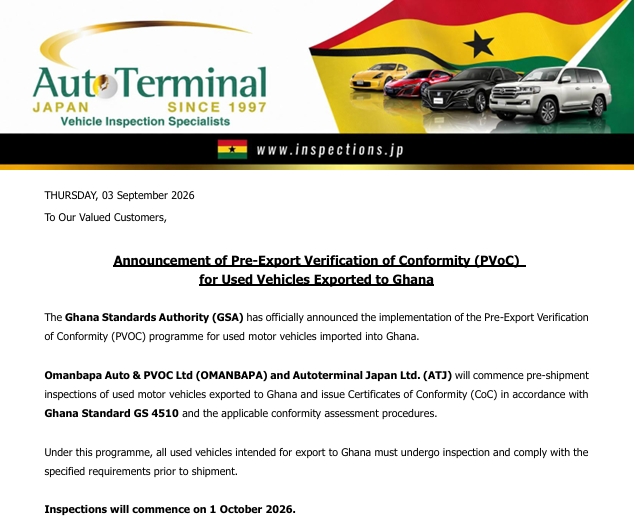
Omanbapa Auto & PVOC Ltd and Autoterminal Japan Ltd (ATJ) will commence pre-shipment inspections of used motor vehicles exported to Ghana under the Ghana Standards Authority's Pre-Export Verification of Conformity (PVoC) programme from 1 October 2026.
Sep 03, 2026
707
Premium Industrial Header Ad Zone Space (Available for Placement)
 Export, Trade & Logistics