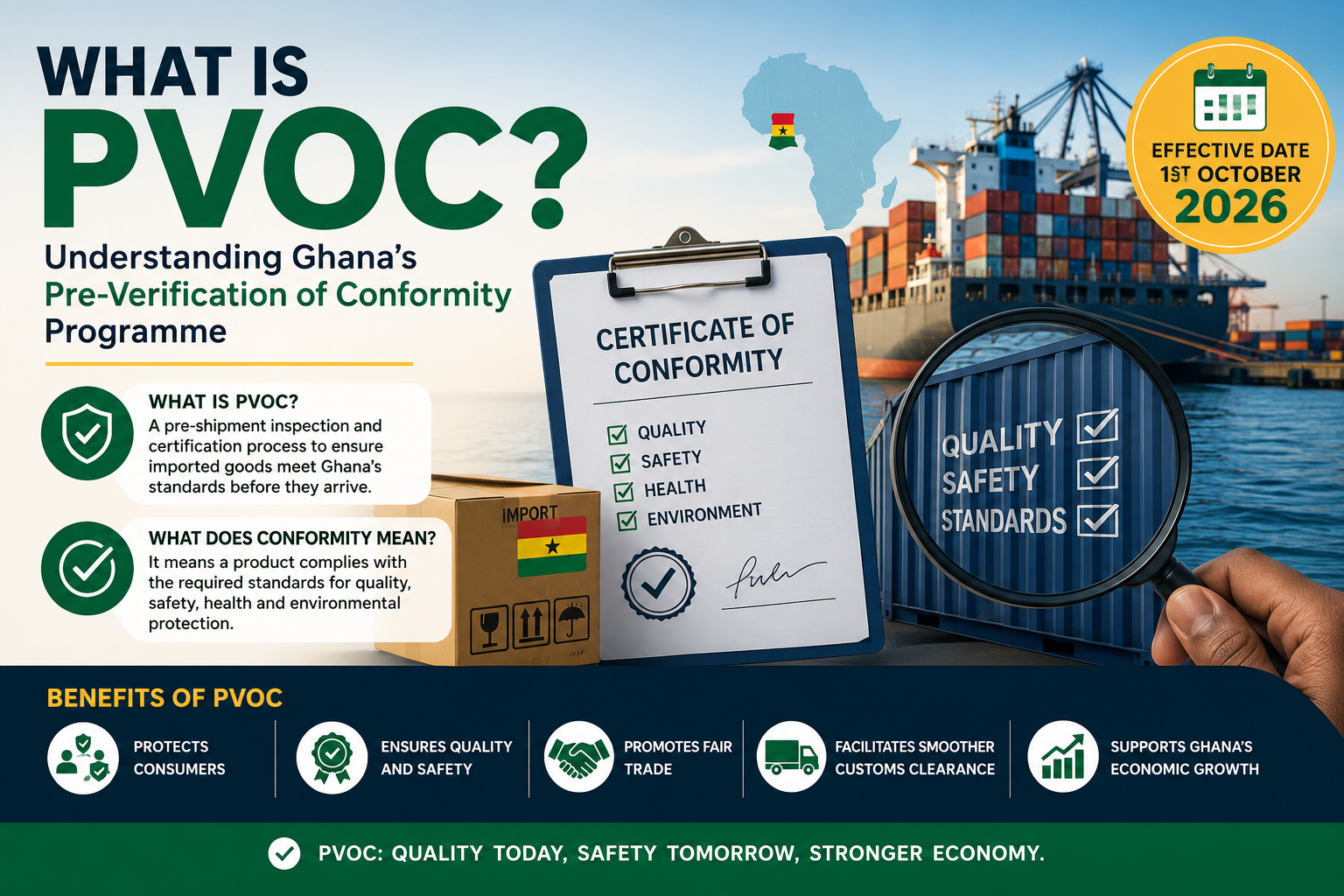
PVoC is a quality assurance programme that checks imported products before they are shipped to Ghana.
Ghana's Pre-Verification of Conformity (PVoC): What Every Importer and Business Should Know
By 24HourBusiness.org
Beginning 1 October 2026, Ghana will implement the Mandatory Pre-Verification of Conformity (PVoC) Programme, a major trade facilitation initiative aimed at ensuring imported goods comply with Ghana's quality, safety, health and environmental standards before they enter the country.
For many businesses, the announcement has raised important questions:
What exactly is PVoC?
What does "Conformity" mean?
Why is the programme being introduced?
How will it affect importers?
Here's what businesses need to know.
What is PVoC?
Pre-Verification of Conformity (PVoC) is an internationally recognised product inspection and certification programme carried out before goods are exported to Ghana.
Under the programme, certain regulated products must be inspected, tested and certified in the exporting country to verify that they comply with Ghana Standards Authority (GSA) requirements.
Only products that successfully pass the verification process are issued a Certificate of Conformity (CoC), allowing them to be cleared more efficiently when they arrive at Ghana's ports.
In simple terms:
PVoC is a quality assurance programme that checks imported products before they are shipped to Ghana.
What Does "Conformity" Mean?
The word "Conformity" simply means:
Meeting an established standard or requirement.
In international trade, conformity means a product has been verified to comply with specific technical, quality, safety, health, or environmental standards.
For example:
An electrical appliance must meet electrical safety requirements.
A vehicle must satisfy approved safety and emissions standards.
Children's toys must comply with health and chemical safety regulations.
Building materials must meet strength and durability standards.
Agricultural products may need to meet quality and phytosanitary requirements.
When a product passes these checks, it is considered "conforming" to the required standards.
Why Is Ghana Introducing PVoC?
The programme seeks to strengthen consumer protection while improving the quality of imported products entering the Ghanaian market.
Key objectives include:
Protecting Consumers
Unsafe or substandard products can pose serious risks to public health and safety. PVoC helps ensure imported goods meet minimum safety requirements before they reach consumers.
Supporting Fair Trade
By ensuring all regulated imports meet the same standards, the programme promotes fair competition among businesses.
Preventing Counterfeit and Substandard Goods
PVoC helps reduce the entry of counterfeit, fake, expired, or poor-quality products into Ghana.
Improving Product Quality
Importers are encouraged to source products from reputable manufacturers that comply with international quality standards.
Facilitating Trade
Products accompanied by the required conformity certificates are expected to experience smoother customs clearance processes.
How Does the PVoC Process Work?
The process generally follows these steps:
An importer places an order with an overseas supplier.
The supplier applies for product verification through an approved inspection company.
The products are inspected and, where necessary, tested.
If the products meet the required standards, a Certificate of Conformity (CoC) is issued.
The goods are shipped to Ghana.
Upon arrival, Ghanaian authorities verify the documentation during customs clearance.
What Is a Certificate of Conformity (CoC)?
A Certificate of Conformity is an official document confirming that a product complies with the applicable standards and technical requirements.
It serves as evidence that the goods have successfully completed the required inspection and testing before shipment.
Without the required certificate, affected goods may be subject to additional inspections, delays, penalties, or other regulatory actions in accordance with Ghana's implementation guidelines.
Which Businesses Will Be Affected?
The programme primarily affects:
Importers
Manufacturers importing raw materials
Automobile importers
Electrical and electronics dealers
Building material suppliers
Chemical importers
Pharmaceutical and healthcare product distributors (where applicable)
Agricultural input importers
Retailers sourcing products internationally
Businesses involved in importing regulated goods should familiarize themselves with the applicable requirements before the programme takes effect.
What Are the Benefits for Ghana?
Successful implementation of PVoC could deliver several long-term benefits:
Improved consumer safety
Higher-quality imported products
Reduced circulation of counterfeit goods
Greater confidence in the marketplace
Stronger protection for legitimate businesses
Enhanced compliance with international trade standards
Increased investor confidence
Looking Ahead
The introduction of Ghana's Mandatory Pre-Verification of Conformity Programme represents an important step toward strengthening quality assurance in international trade.
For importers, preparation will be essential. Understanding the requirements, working with compliant suppliers, and ensuring products meet Ghana's standards before shipment can help minimise delays and facilitate smoother trade.
As the implementation date approaches, businesses are encouraged to stay informed through official guidance issued by the Ghana Standards Authority and other relevant regulatory agencies.
PVoC Explained in Simple Terms
Term
Meaning
PVoC
Pre-Verification of Conformity
Pre-Verification
Inspection before goods are shipped
Conformity
Compliance with required standards
Certificate of Conformity (CoC)
Official document confirming products meet required standards
Purpose
To prevent substandard imports and protect consumers
Disclaimer:
The views expressed on this site are those of the contributors or columnists, and do not necessarily reflect 24HourBusiness.com's position. 24HourBusiness.com will not be responsible or liable for any inaccurate or incorrect statements in the contributions or columns here.
The Government of Ghana is set to formally hand over the cleared right-of-way for the Accra–Kumasi Expressway Project at Ejisu-Kwaso on 14 September 2026. The milestone is expected to pave the way for subsequent stages of the major road infrastructure project, which is aimed at improving connectivity, transportation efficiency and economic activity along the Accra–Kumasi corridor.
Ghana Armed Forces engineers have completed the 175.6km Accra–Kumasi Expressway right-of-way clearing in 19 weeks, marking a major infrastructure milestone for Ghana.
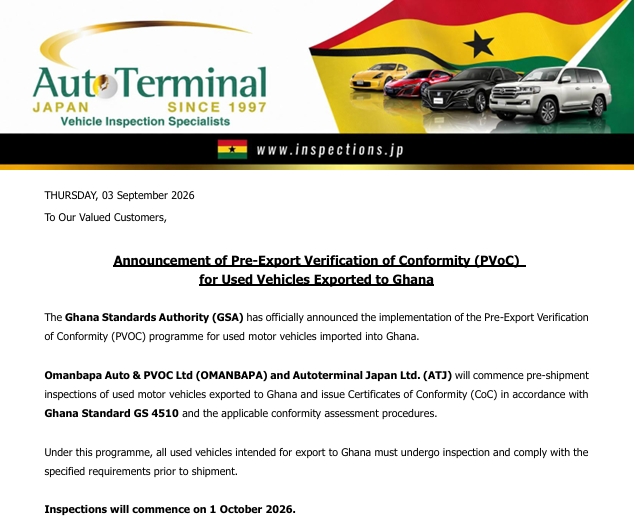
Omanbapa Auto & PVOC Ltd and Autoterminal Japan Ltd (ATJ) will commence pre-shipment inspections of used motor vehicles exported to Ghana under the Ghana Standards Authority's Pre-Export Verification of Conformity (PVoC) programme from 1 October 2026.
Sep 03, 2026
707
Premium Industrial Header Ad Zone Space (Available for Placement)
 Export, Trade & Logistics