Certificate of Conformity (CoC): The Most Important Document Every Importer Must Understand
Learn what a Certificate of Conformity (CoC) is, why it is required under Ghana's Pre-Verification of Conformity (PVoC) Programme, how it is obtained, and what importers should know before shipping regulated goods to Ghana.
Certificate of Conformity (CoC) Ghana
As Ghana prepares to implement the Pre-Verification of Conformity (PVoC) Programme on 1 October 2026, one document will become central to the importation of regulated products into the country—the Certificate of Conformity (CoC).
For many importers, exporters and logistics professionals, the Certificate of Conformity may appear to be just another shipping document. In reality, it is one of the most important compliance documents in international trade. It confirms that products have been inspected, tested where necessary, and verified to comply with the applicable standards and technical regulations before they are shipped to their destination.
Understanding what the Certificate of Conformity is, why it matters and how it fits into the PVoC process will help businesses avoid shipment delays, minimise compliance risks and ensure smoother customs clearance.
What is a Certificate of Conformity (CoC)?
A Certificate of Conformity (CoC) is an official document issued after regulated products have successfully undergone conformity assessment and have been found to comply with the applicable standards and technical requirements of the importing country.
The certificate serves as documented evidence that the goods meet the required quality, safety and regulatory standards before shipment.
Rather than relying solely on inspections after goods arrive at the port of destination, the PVoC system verifies compliance at the point of export. This proactive approach reduces the likelihood of non-compliant products entering the local market.
Simply put, the Certificate of Conformity tells the importing country that the shipment has already been assessed against the required standards.
Why is the Certificate of Conformity Important?
The CoC plays a critical role in modern international trade because it helps ensure that products entering a country meet recognised quality and safety requirements.
For governments, it strengthens regulatory oversight.
For businesses, it reduces uncertainty.
For consumers, it provides greater confidence that imported products meet acceptable standards.
The Certificate of Conformity is therefore more than an administrative requirement—it is an important trade facilitation tool that supports quality assurance throughout the supply chain.
Why Has Ghana Introduced the CoC Requirement?
The introduction of the Certificate of Conformity under Ghana's PVoC Programme is expected to support several national objectives, including:
Improving the quality of imported goods.
Protecting consumers from unsafe and counterfeit products.
Promoting fair competition for compliant businesses.
Supporting industrial development.
Enhancing customs efficiency.
Reducing the circulation of substandard products.
Strengthening Ghana's quality infrastructure.
Aligning with international conformity assessment practices.
These objectives contribute to a safer marketplace and a more competitive trading environment.
When is a Certificate of Conformity Required?
Under the PVoC Programme, regulated products intended for export to Ghana are expected to obtain a Certificate of Conformity before shipment.
The certificate becomes part of the shipment documentation and may be required during import clearance for products covered by the programme.
Importers should confirm whether the products they intend to import fall within the regulated categories published by the relevant authorities.
What Information Does a Certificate of Conformity Usually Contain?
Although the exact format may differ depending on the conformity assessment body, a Certificate of Conformity generally includes information such as:
Certificate number
Exporter's details
Importer's details
Country of origin
Country of destination
Product description
Product quantity
Applicable standards
Inspection reference
Test report references (where applicable)
Date of issue
Name of the issuing conformity assessment body
The document provides traceability and demonstrates that conformity assessment has been completed before shipment.
While detailed operational procedures may vary depending on the product category and authorised inspection body, the process generally follows these stages.
1. Product Order
An importer places an order with an overseas supplier.
2. Inspection Request
The supplier or exporter requests inspection through an authorised conformity assessment body.
3. Product Inspection
The goods are inspected to verify that they correspond with the declared specifications.
4. Product Testing
Where required, samples may undergo laboratory testing to confirm compliance with applicable standards.
5. Documentation Review
Supporting documents are reviewed to verify product specifications and regulatory compliance.
6. Certificate Issued
Once conformity requirements are satisfied, a Certificate of Conformity is issued before shipment.
Who Benefits from the Certificate of Conformity?
The Certificate of Conformity benefits every participant in the supply chain.
Importers
Importers gain greater confidence that shipments comply with applicable requirements before arrival.
Exporters
Exporters demonstrate compliance with the destination country's regulations.
Manufacturers
Manufacturers strengthen confidence in the quality of their products.
Customs Authorities
Authorities can process compliant shipments more efficiently.
Consumers
Consumers benefit from improved product quality and increased protection from unsafe goods.
What Happens if Goods Do Not Meet the Required Standards?
Where products fail to satisfy the applicable conformity requirements, the necessary corrective actions must typically be taken before shipment can proceed under the applicable procedures.
This may involve:
Correcting identified deficiencies.
Replacing non-compliant products.
Providing additional documentation.
Re-inspection or re-testing where applicable.
Importers should work closely with their suppliers to resolve any issues before goods are shipped.
Common Mistakes Importers Should Avoid
Businesses can reduce compliance risks by avoiding common mistakes such as:
Waiting Until the Last Minute
Inspection and certification should be planned well before the shipment date.
Assuming Every Product is Exempt
Businesses should verify whether their products fall within the regulated categories.
Using Incomplete Documentation
Missing or inaccurate documentation can delay the conformity assessment process.
Failing to Communicate with Suppliers
Suppliers should understand Ghana's PVoC requirements before production and shipment.
Ignoring Product Standards
Compliance begins during product selection—not after the goods are manufactured.
Best Practices for Importers
Businesses can prepare by adopting several practical measures.
Review all imported product lines.
Confirm whether products are regulated.
Build sufficient lead time into procurement schedules.
Maintain complete technical documentation.
Work with reputable overseas suppliers.
Stay informed about official implementation guidelines.
Train procurement and logistics teams on compliance requirements.
Early preparation can significantly reduce delays and improve operational efficiency.
Frequently Asked Questions
Is a Certificate of Conformity the same as a Certificate of Origin?
No. A Certificate of Origin identifies where goods were produced, while a Certificate of Conformity confirms that products comply with applicable standards and technical regulations.
Does every imported product require a Certificate of Conformity?
Only products covered under Ghana's PVoC Programme are expected to require a Certificate of Conformity.
Who issues the Certificate of Conformity?
Certificates are issued by authorised conformity assessment bodies designated to carry out inspections and conformity verification under the applicable programme.
Is the Certificate issued before or after shipment?
The Certificate of Conformity is issued before shipment once the required conformity assessment has been successfully completed.
Can a shipment be delayed without the required documentation?
Businesses importing regulated products should ensure that all required conformity documentation accompanies their shipments to support smooth import clearance.
Is the Certificate of Conformity valid forever?
No. The certificate applies to the shipment and conformity assessment for which it was issued. Businesses should follow the applicable programme requirements for each shipment.
Certificate of Conformity vs Certificate of Origin
Although their names sound similar, they serve completely different purposes.
Certificate of Conformity
Certificate of Origin
Confirms compliance with standards
Confirms the country where goods were produced
Supports product quality assurance
Supports customs and trade preference requirements
Issued following conformity assessment
Issued to establish origin of goods
Used for regulatory compliance
Used for trade documentation
Understanding the distinction helps businesses prepare the correct documentation for international shipments.
Looking Ahead
The Certificate of Conformity will become one of the most important documents in Ghana's evolving import compliance framework under the Pre-Verification of Conformity Programme.
Rather than viewing it as an administrative burden, businesses should recognise it as an important quality assurance mechanism that helps reduce supply chain risks, improve product standards and strengthen confidence in Ghana's international trade environment.
Importers who understand the Certificate of Conformity, work closely with their suppliers and prepare well in advance of shipment will be better positioned to navigate the new compliance landscape successfully.
As Ghana implements the PVoC Programme, 24HourBusiness.org will continue to publish practical guides, expert insights and educational resources to help businesses understand conformity assessment, import regulations and the changing landscape of international trade.
Disclaimer:
The views expressed on this site are those of the contributors or columnists, and do not necessarily reflect 24HourBusiness.com's position. 24HourBusiness.com will not be responsible or liable for any inaccurate or incorrect statements in the contributions or columns here.
The Government of Ghana is set to formally hand over the cleared right-of-way for the Accra–Kumasi Expressway Project at Ejisu-Kwaso on 14 September 2026. The milestone is expected to pave the way for subsequent stages of the major road infrastructure project, which is aimed at improving connectivity, transportation efficiency and economic activity along the Accra–Kumasi corridor.
Ghana Armed Forces engineers have completed the 175.6km Accra–Kumasi Expressway right-of-way clearing in 19 weeks, marking a major infrastructure milestone for Ghana.
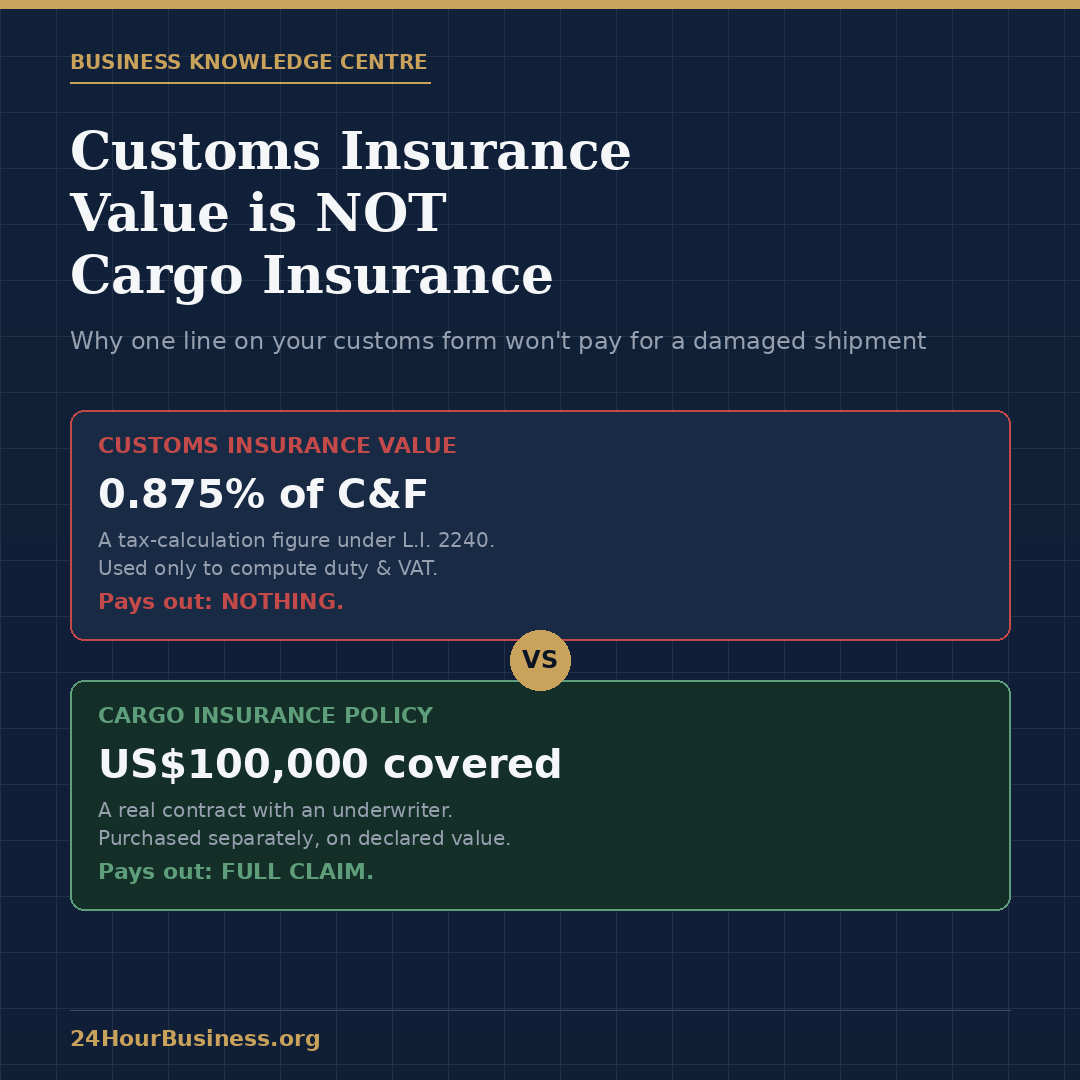
Customs insurance value and cargo insurance are not the same thing. Learn why a damaged US$100,000 shipment could mean a US$100,000 loss without a real policy.
Sep 03, 2026
528
Premium Industrial Header Ad Zone Space (Available for Placement)

 Export, Trade & Logistics