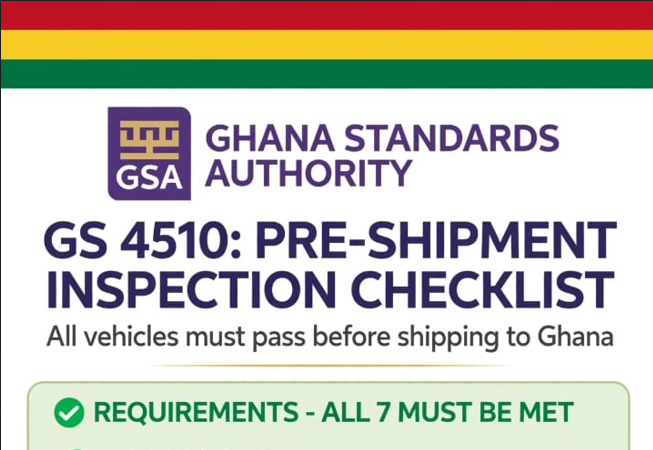
Inspections will be conducted based on the requirements of GS 4510. Under the standard, vehicles with major damage will not be permitted for importation.
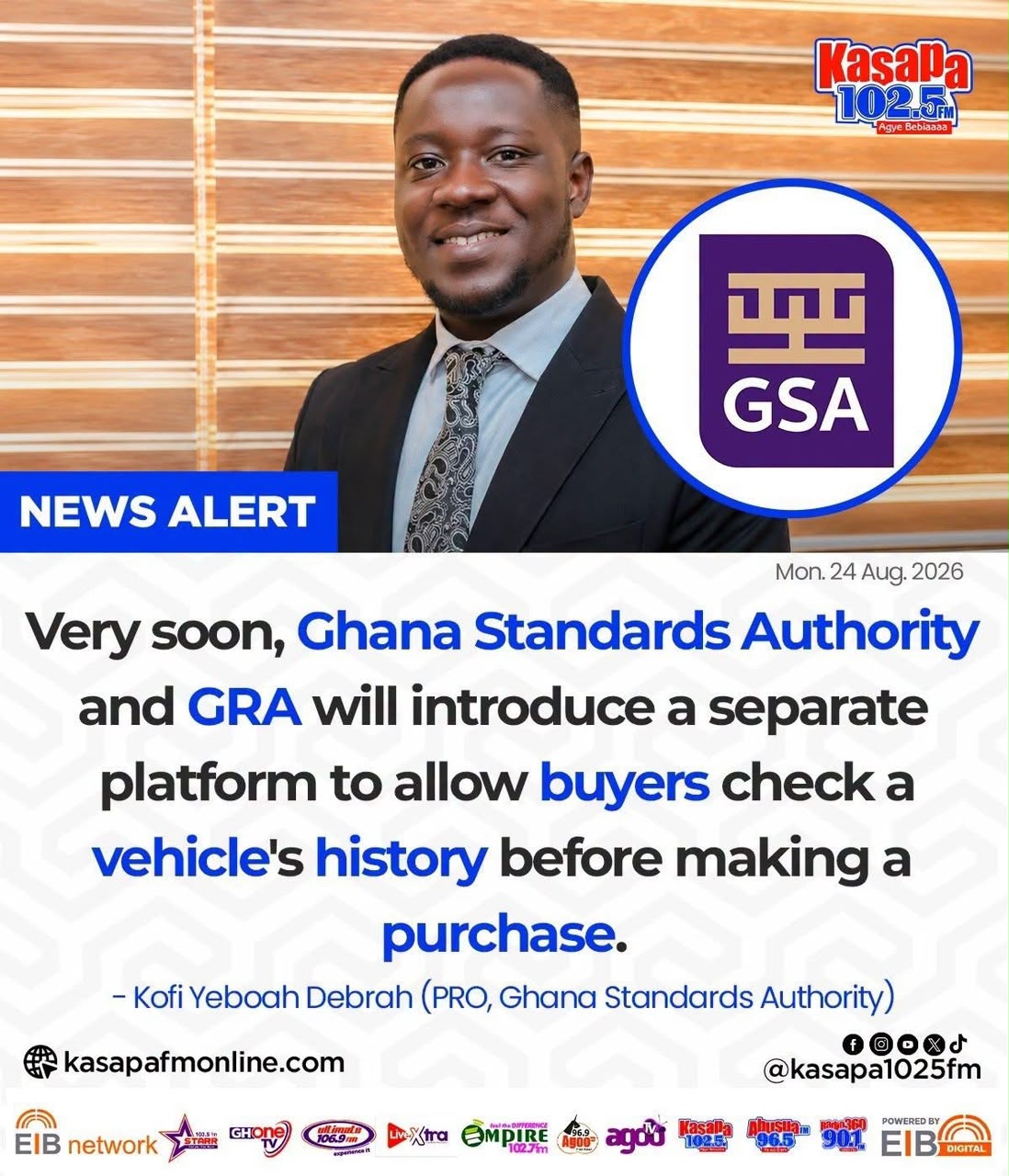
Accra, Ghana – July 31, 2026 – The Ghana Standards Authority (GSA) has confirmed that the enforcement of Ghana's new National Vehicle Standards (NVS) will officially begin on October 1, 2026, ushering in one of the country's most significant automotive regulatory reforms in decades.
The measures form part of the Pre-Verification of Conformity (PVoC) programme and Ghana's broader strategy to improve road safety, environmental protection, consumer confidence, and support the growth of a modern automotive industry.
Under the new regime, used vehicles more than 10 years old from the date of manufacture will no longer be eligible for import into Ghana. Every imported used vehicle must undergo inspection by an approved third-party inspection body before shipment and obtain a valid Certificate of Conformity (CoC) before it can be cleared into the country.
Vehicles That Will No Longer Be Allowed into Ghana
Beyond the 10-year age restriction, the new standards prohibit several categories of vehicles considered unsafe or unsuitable for Ghana's roads.
1. Used Vehicles Older Than 10 Years
Any vehicle exceeding ten years from its manufacturing date will be refused entry under the new enforcement regime.
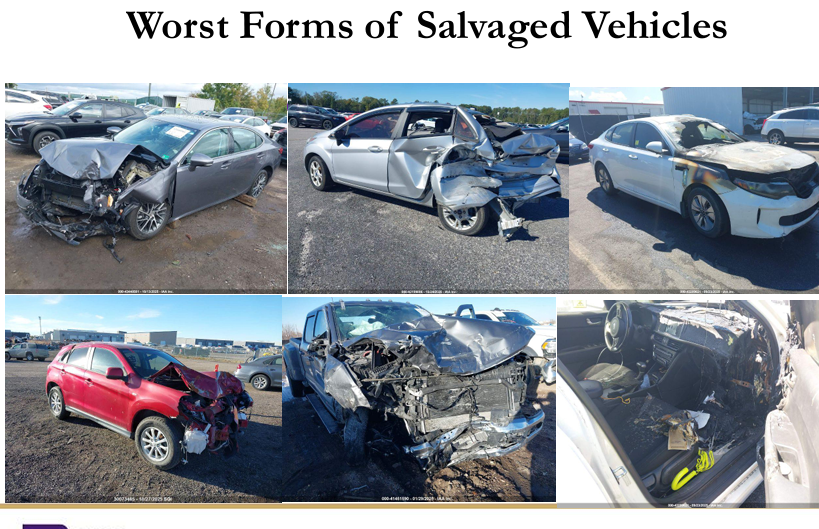
2. Salvaged or Accident-Damaged Vehicles
Vehicles declared as:
Total loss
Collision damaged
Flood damaged
Fire damaged
Structurally damaged
Rebuilt salvage vehicles
will not be permitted for import.
3. Right-Hand Drive (RHD) Vehicles
Since Ghana operates a left-hand traffic system, vehicles originally manufactured with right-hand steering are prohibited.
4. Vehicles Without Kilometer Speedometers
Imported vehicles must display speed readings in kilometres per hour (km/h). Vehicles displaying only miles per hour may fail conformity requirements.
5. Vehicles That Fail Safety Standards
Vehicles with major defects affecting safety may also be rejected, including:
Defective braking systems
Faulty steering systems
Unsafe suspension
Poor tyre condition
Non-functional airbags (where originally fitted)
Serious chassis or structural corrosion
Unsafe lighting systems
6. Vehicles That Fail Emissions Requirements
Imported vehicles must comply with Ghana's prescribed emissions standards. Vehicles producing excessive exhaust emissions may fail inspection and be denied certification.
The reforms seek to:
Improve road safety by reducing unsafe vehicles.
Protect consumers from purchasing defective imports.
Reduce environmental pollution through cleaner vehicle imports.
Prevent Ghana from becoming a destination for end-of-life vehicles.
Support Ghana's Automotive Development Programme and encourage local vehicle assembly and manufacturing.
Align Ghana's automotive sector with international quality standards.
What Importers Must Do
Beginning October 1, 2026, importers should:
Verify the vehicle's manufacturing year before purchase.
Ensure the vehicle is not classified as salvage or accident damaged.
Use an approved PVoC inspection company.
Obtain a valid Certificate of Conformity (CoC) before shipment.
Ensure the vehicle satisfies Ghana's safety and emissions requirements.
Failure to comply may result in refusal of entry, delays, or additional penalties at Ghana's ports.
A New Era for Ghana's Automotive Industry
The October 1 implementation marks the beginning of stricter regulation of vehicle imports into Ghana. Authorities believe the reforms will improve the quality of vehicles on Ghana's roads, enhance public safety, strengthen consumer protection, and create a more competitive environment for vehicle assembly and automotive investment.
For vehicle importers, dealers, and prospective buyers, understanding and complying with these new standards will be essential to avoid costly mistakes and ensure smooth importation under Ghana's new automotive regulatory framework.
 Export, Trade & Logistics