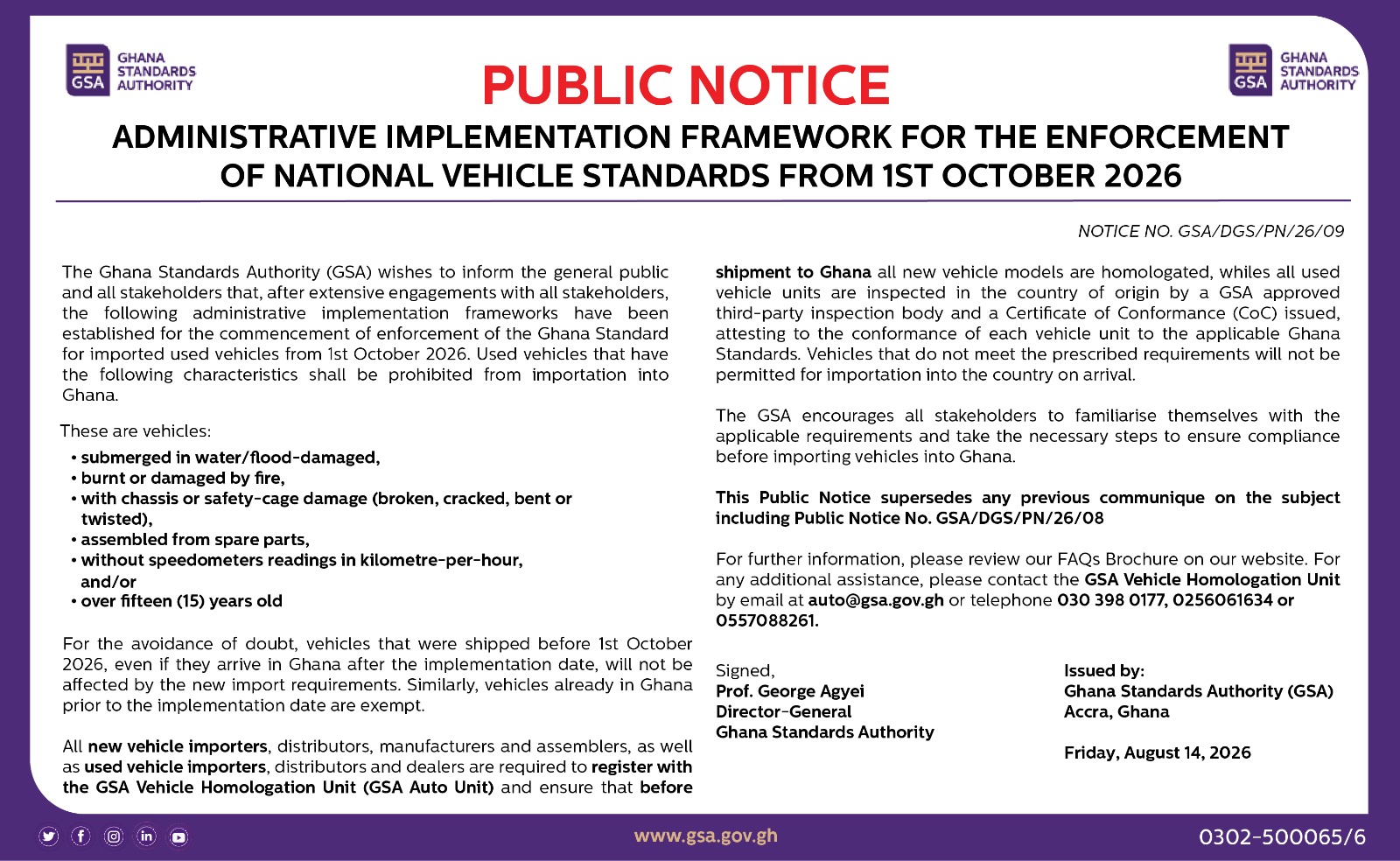
Learn how Ghana's Pre-Verification of Conformity (PVoC) Programme works, who it affects, what a Certificate of Conformity (CoC) is, and how businesses can prepare before implementation on 1 October 2026.
Everything Importers Need to Know About Ghana's Pre-Verification of Conformity (PVoC) Programme
With Ghana set to implement the Pre-Verification of Conformity (PVoC) Programme on 1 October 2026, importers, exporters, manufacturers, freight forwarders, customs brokers and logistics companies are preparing for one of the most significant changes to the country's import quality assurance framework in recent years.
The programme represents a major step toward ensuring that regulated products entering Ghana comply with approved national and international standards before they are shipped from their country of origin.
If your business imports products into Ghana, understanding the PVoC Programme is essential for avoiding shipment delays, reducing compliance risks and ensuring smooth customs clearance.
What is the PVoC Programme?
Pre-Verification of Conformity (PVoC) is a conformity assessment programme that requires specified goods destined for Ghana to be inspected, tested and certified before shipment.
Rather than waiting until products arrive at Ghana's ports, the verification process is conducted in the exporting country. Once the products successfully meet the applicable standards, a Certificate of Conformity (CoC) is issued to accompany the shipment.
The objective is to ensure that products entering Ghana comply with established quality, health, safety and environmental requirements.
Why Has Ghana Introduced PVoC?
The introduction of PVoC supports Ghana's broader efforts to:
- Improve the quality of imported goods
- Protect consumers from unsafe and substandard products
- Reduce counterfeit and fake products on the market
- Promote fair competition among compliant businesses
- Enhance confidence in Ghana's trading environment
- Support industrialisation and local manufacturing
- Strengthen trade facilitation under the African Continental Free Trade Area (AfCFTA)
By ensuring compliance before shipment, authorities can reduce disputes, minimise port delays and improve regulatory efficiency.
Who Will Be Affected?
The programme affects a wide range of stakeholders involved in international trade, including:
- Importers
- Exporters supplying goods to Ghana
- Manufacturers
- Freight forwarders
- Customs brokers
- Shipping companies
- Distribution companies
- Retail businesses
- Industrial buyers
- Government regulatory agencies
Businesses importing regulated products should familiarise themselves with the new requirements well before shipment.
How Does the PVoC Process Work?
Although operational procedures may vary depending on product categories, the general process follows these steps:
Step 1: Place Your Order
The importer places an order with an overseas supplier.
Step 2: Product Inspection
Before shipment, the products undergo inspection by an authorised conformity assessment body.
Step 3: Product Testing
Where required, samples may be tested to verify compliance with applicable standards.
Step 4: Documentation Review
Relevant technical documents and supporting information are reviewed.
Step 5: Certificate of Conformity
Once the products satisfy the applicable requirements, a Certificate of Conformity (CoC) is issued.
Step 6: Shipment
The goods are shipped together with the required conformity documentation.
Step 7: Customs Clearance
The CoC becomes part of the import documentation used during customs clearance in Ghana.
What is a Certificate of Conformity (CoC)?
A Certificate of Conformity is an official document confirming that inspected products comply with the applicable standards and technical regulations required for importation into Ghana.
Without this certificate, affected shipments may experience delays, additional inspections or other compliance actions, depending on applicable regulations.
Importers should therefore ensure that suppliers obtain the certificate before goods are shipped.
Which Products Are Likely to Be Covered?
Although the final list of regulated products will be communicated by the relevant authorities, PVoC programmes typically apply to products such as:
- Electrical and electronic appliances
- Building and construction materials
- Automotive products and spare parts
- Industrial machinery
- Household consumer goods
- Chemicals
- Agricultural products
- Food-contact materials
- Personal protective equipment
- Selected manufactured products
Importers should always verify whether their specific products fall within the regulated categories.
Benefits of the PVoC Programme
The implementation of PVoC offers several benefits to businesses and consumers.
Improved Product Quality
Products entering the Ghanaian market are expected to meet recognised quality standards.
Faster Customs Processes
Complete conformity documentation can help facilitate more efficient customs clearance.
Reduced Business Risk
Importers are able to identify compliance issues before products are shipped, reducing costly surprises at the port.
Consumer Protection
The programme helps minimise the circulation of unsafe and counterfeit products.
Stronger Market Confidence
Businesses that consistently comply with recognised standards strengthen customer confidence and brand reputation.
How Should Importers Prepare?
Businesses should begin preparations immediately by:
- Reviewing the products they import.
- Confirming whether those products fall under the PVoC Programme.
- Working closely with overseas suppliers.
- Understanding inspection and testing requirements.
- Preparing the necessary technical documentation.
- Allowing sufficient time for inspections before shipment.
- Monitoring official guidance issued by the relevant authorities.
Early preparation can significantly reduce delays once the programme becomes fully operational.
Frequently Asked Questions
Does every imported product require PVoC?
Only regulated products covered under the programme will require conformity verification.
Is the inspection carried out in Ghana?
No. The purpose of PVoC is to verify conformity before shipment from the exporting country.
What happens if goods are shipped without the required documentation?
Affected shipments may be subject to additional regulatory procedures, delays or other compliance measures in accordance with applicable regulations.
Is PVoC only for large companies?
No. The programme applies to businesses importing regulated products, regardless of their size.
Looking Ahead
The launch of Ghana's Pre-Verification of Conformity Programme represents a significant milestone in strengthening the country's quality infrastructure and improving confidence in international trade.
For importers, compliance should not be viewed simply as a regulatory obligation but as an opportunity to improve supply chain reliability, reduce business risks and build stronger relationships with customers and trading partners.
Businesses that understand the programme early, engage with their suppliers and prepare the necessary documentation will be better positioned for a smooth transition when the programme takes effect on 1 October 2026.
As implementation progresses, 24HourBusiness.org will continue to provide practical guides, expert analysis and timely updates to help businesses navigate Ghana's evolving trade and regulatory landscape.
 Export, Trade & Logistics