Discover 10 proven strategies insurance brokers can use to optimize operations, improve customer service, reduce costs, increase productivity, strengthen compliance, and grow a profitable insurance brokerage.
Technology, Automation and Customer-Centric Strategies for the Modern Insurance Brokerage
The insurance brokerage industry is evolving rapidly. Customers now expect faster responses, digital services, personalized advice and seamless policy management.
At the same time, brokers face increasing regulatory requirements, tighter competition, rising operational costs and growing pressure to improve profitability.
Operational efficiency has become one of the most important competitive advantages for insurance brokers. Firms that streamline their operations can reduce costs, improve customer satisfaction, increase staff productivity and grow their books of business more effectively.
Whether you operate a small brokerage or a large multinational firm, these ten strategies can help optimize operations and position your business for sustainable growth.
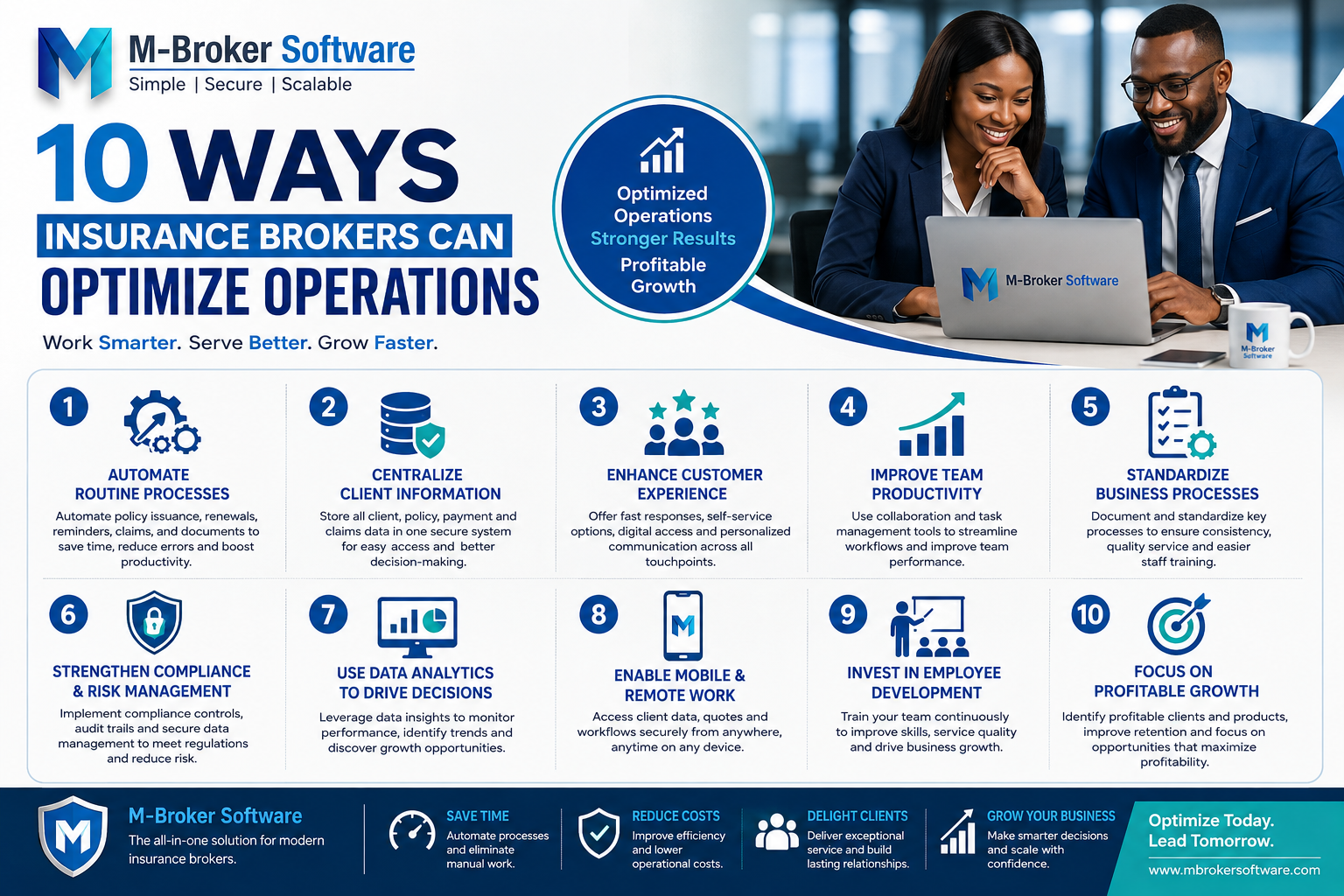
1. Automate Routine Processes
Many insurance brokers still spend valuable hours processing paperwork, issuing policies, sending renewal reminders, preparing quotations and following up with clients manually.
Insurance management software can automate:
- Policy issuance
- Renewals
- Premium reminders
- Claims notifications
- Commission calculations
- Document generation
- Email and SMS communications
Automation reduces administrative workload, minimizes human error and allows staff to focus on business development and client relationships.
2. Centralize Client Information
Customer information should never be scattered across spreadsheets, emails, filing cabinets and individual staff computers.
A centralized Broker Management System (BMS) or Customer Relationship Management (CRM) platform enables brokers to maintain a complete client profile that includes:
- Personal and business information
- Policies
- Claims history
- Payment records
- Renewal schedules
- Risk assessments
- Communication history
A single source of truth improves customer service and supports faster decision-making.
3. Enhance Customer Experience
Today's clients expect quick responses and convenient digital interactions.
Insurance brokers should provide:
- Online quotation requests
- Self-service portals
- Mobile-friendly websites
- WhatsApp support
- Electronic policy delivery
- Digital claims submission
- Personalized communication
Superior customer experience improves client retention, generates referrals, and strengthens long-term relationships.
4. Improve Team Productivity
Successful brokerages measure productivity rather than simply tracking attendance.
Modern collaboration tools help teams:
- Assign tasks
- Track workflows
- Monitor performance
- Manage deadlines
- Share documents securely
- Collaborate across departments
Clear workflows reduce delays and improve accountability throughout the organization.
5. Standardize Business Processes
Every brokerage should document standard operating procedures for key activities.
Examples include:
- New client onboarding
- Quotation preparation
- Policy issuance
- Endorsements
- Claims handling
- Premium collection
- Renewal management
- Complaint resolution
Standardized processes reduce inconsistencies, improve service quality, and simplify staff training.
6. Strengthen Compliance and Risk Management
Insurance is a highly regulated industry. Brokers must comply with licensing requirements, anti-money laundering (AML) obligations, data protection laws and industry regulations.
Brokerages should implement:
- Compliance checklists
- Audit trails
- Secure document management
- Access controls
- Regular compliance reviews
- Cybersecurity policies
- Strong governance reduces regulatory risk and builds trust with clients and insurers.
7. Use Data Analytics to Drive Decisions
Data has become one of the most valuable assets for insurance brokers.
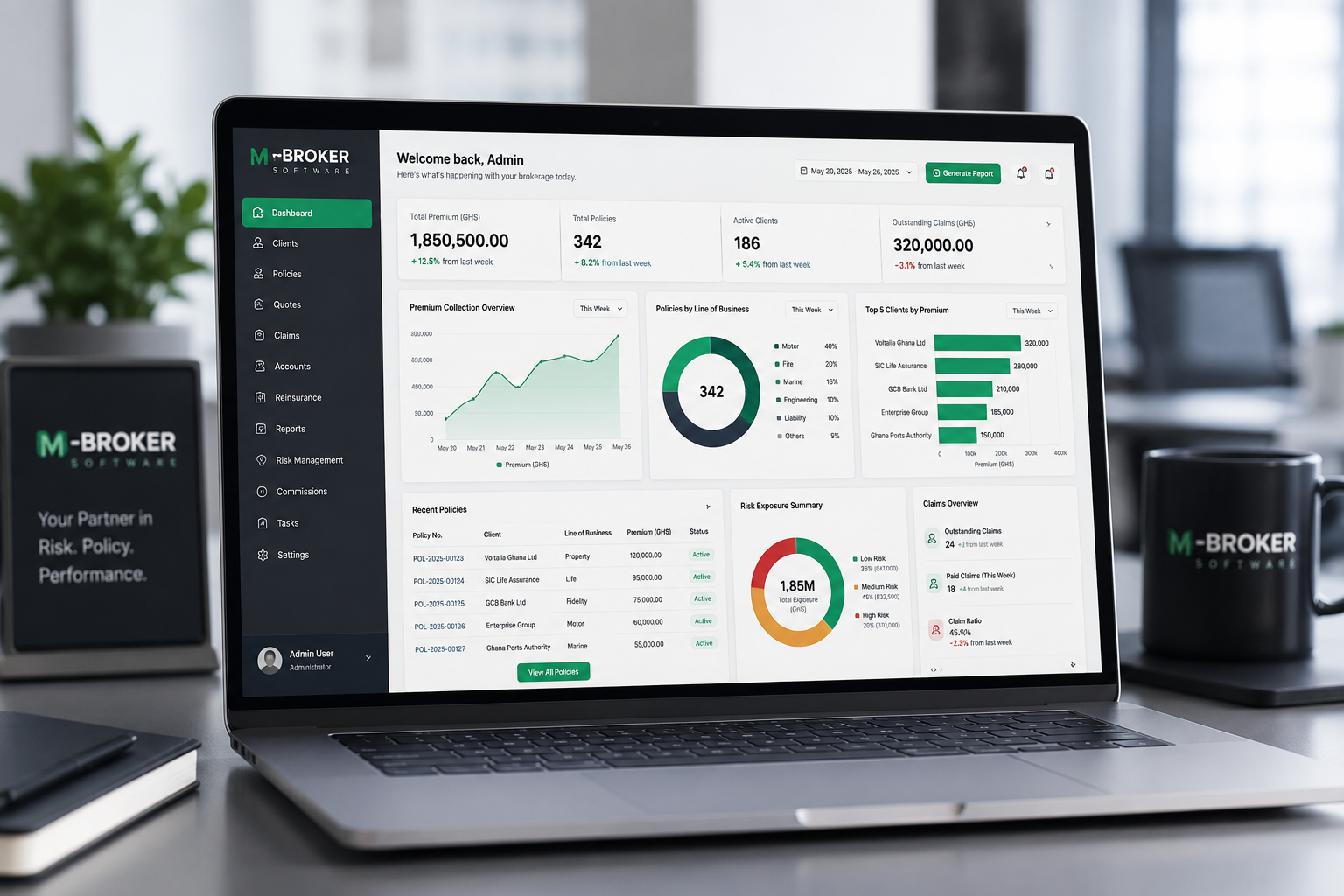
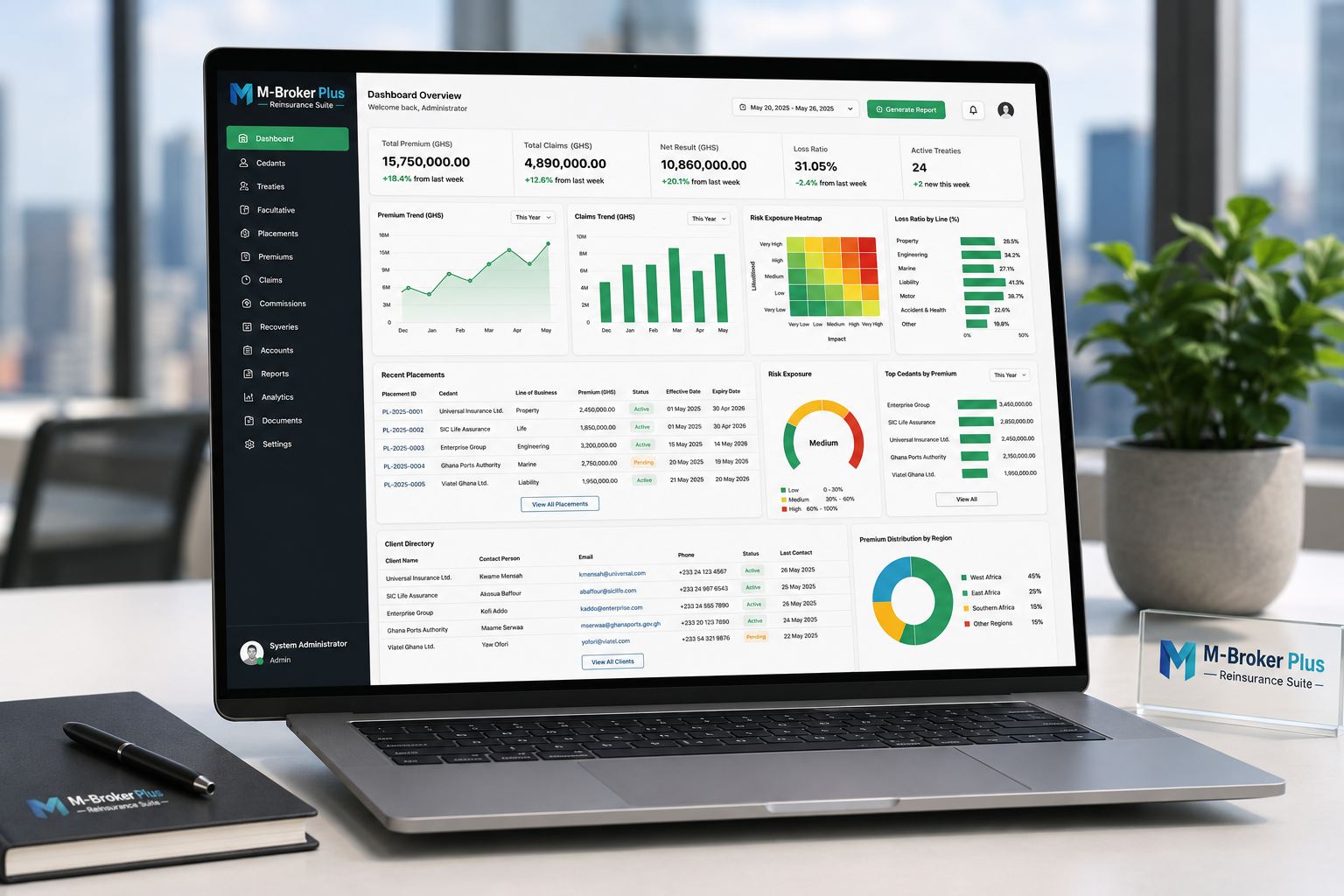
Business intelligence dashboards can provide insights into:
- Policy growth
- Client retention
- Claims trends
- Premium production
- Commission income
- Staff performance
- Renewal success rates
- Cross-selling opportunities
Data-driven decision-making enables brokers to identify growth opportunities and improve operational efficiency.
8. Enable Mobile and Remote Work
Insurance professionals increasingly need access to information while visiting clients, inspecting risks, or working remotely.
Cloud-based brokerage systems allow staff to:
- Access client records securely
- Generate quotations
- Update policy information
- Record meeting notes
- Upload documents
- Process approvals from anywhere
Mobile access improves responsiveness and business continuity.
9. Invest in Employee Development
Technology alone cannot transform a brokerage without skilled people.
Regular training should cover:
- Insurance products
- Regulatory compliance
- Sales techniques
- Customer service
- Risk management
- Digital tools
- Cybersecurity awareness
Well-trained employees deliver better advice, stronger client relationships, and higher productivity.
10. Focus on Profitable Growth
Not all business contributes equally to profitability.
Insurance brokers should regularly review their portfolio to identify:
- High-value clients
- Profitable product lines
- Loss-making accounts
- Cross-selling opportunities
- Renewal performance
- Market opportunities
Focusing on profitable growth ensures that expansion translates into stronger financial performance rather than increased operational complexity.
The Digital Brokerage Advantage
The future belongs to insurance brokers that embrace digital transformation. Automation, cloud technology, artificial intelligence, customer analytics, and integrated insurance platforms are changing how brokerage businesses operate.
Digital brokerages can process more business with fewer manual interventions, respond faster to customer needs, improve compliance and make better strategic decisions based on real-time information.
For brokers in Ghana and across Africa, digital transformation is no longer optional—it is essential for remaining competitive in an increasingly technology-driven insurance market.
Conclusion
Operational excellence is not achieved overnight. It requires a commitment to continuous improvement, investment in technology, standardized processes, employee development and a customer-first culture.
Insurance brokers that embrace these ten optimization strategies will reduce operating costs, improve service delivery, increase client retention, strengthen compliance, and position themselves for long-term profitability.
As the insurance industry continues to evolve, firms that combine innovation with operational discipline will be best placed to capture new opportunities, build resilient businesses and deliver greater value to clients.
 Insurance & Risk Management