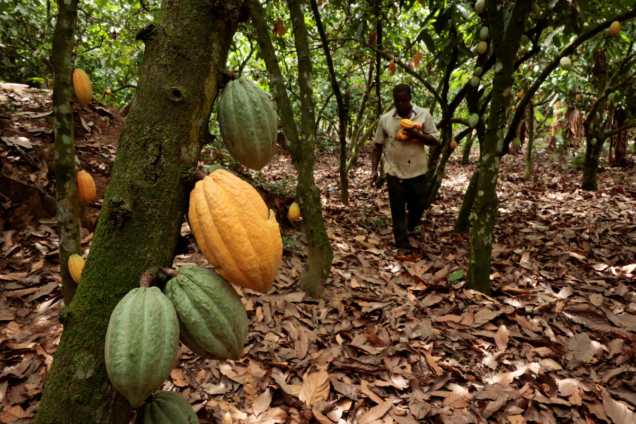
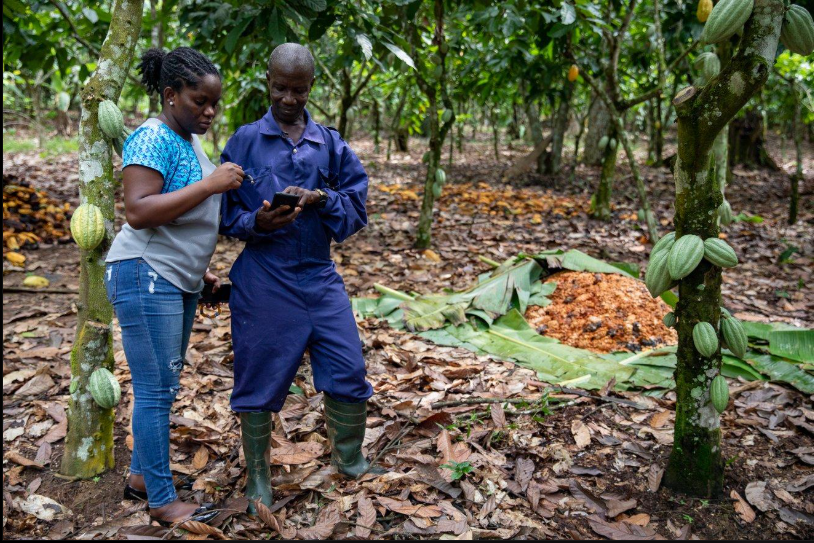
Ghana is strengthening its digital cocoa traceability system as international markets demand greater transparency, verifiable farm origins and more sustainable supply chains.
By 24HourBusiness.org | October 19, 2026
Ghana’s cocoa industry is entering a new phase of digital transformation as the government, development partners and private-sector businesses work to improve the traceability of cocoa from farms to international markets.
The Ghana Cocoa Traceability System (GCTS), implemented by the Ghana Cocoa Board (COCOBOD) with support from the German development agency Deutsche Gesellschaft für Internationale Zusammenarbeit (GIZ), is designed to strengthen the recording and tracking of cocoa throughout the supply chain.
In a report published on September 29, 2026, GIZ highlighted progress in Ghana’s efforts to improve cocoa traceability, including digital farmer registration, farm mapping, purchasing records and cocoa tagging.
The initiative receives support from the German Government and the European Union under the Sustainable Cocoa Programme, implemented in collaboration with COCOBOD.
The development comes as international buyers increasingly require evidence of where agricultural commodities originate, how they are produced and whether they comply with applicable environmental and legal requirements.
For Ghana, one of the world's leading cocoa-producing countries, the ability to provide reliable information about cocoa production and movement could have important implications for farmers, Licensed Buying Companies (LBCs), processors, exporters and international trading partners.
What Is Digital Cocoa Traceability?
Digital traceability is the use of electronic records and identification systems to track a product through the stages of its supply chain.
In cocoa production, this means establishing a verifiable connection between a farmer, the farm where the cocoa was grown, the purchasing transaction, the aggregation and handling process and the eventual movement of the beans towards export.
Ghana’s Cocoa Traceability System brings together several important elements:
Farmer registration: Recording the identities and relevant information of cocoa farmers participating in the system.
Farm mapping: Using geographical information, including farm locations, to establish where cocoa is produced.
Digital purchasing records: Recording cocoa purchases and transactions as the beans move through the approved purchasing chain.
Cocoa tagging: Using identification mechanisms to help associate cocoa consignments or batches with their relevant traceability records.
Supply-chain verification: Connecting available records to help establish the origin and movement of cocoa through the marketing and export process.
When these components work together, they can provide a clearer picture of the journey from farm to port.
Traceability is not simply about replacing paper records with computers. It is about ensuring that the information recorded at different stages is consistent, reliable and capable of being verified.
Why International Markets Are Demanding Traceability
One of the major developments influencing the cocoa industry is the European Union Deforestation Regulation (EUDR).
The regulation establishes requirements intended to ensure that covered commodities entering the EU market are deforestation-free and produced in accordance with relevant legislation in their countries of origin.
Cocoa is among the commodities covered by the regulation.
Under the EU's current implementation timetable, the main EUDR obligations are scheduled to apply from December 30, 2026, for large and medium-sized operators, and from June 30, 2027, for most micro and small operators. Certain micro and small operators already covered by the EU Timber Regulation have an earlier application date.
The regulation has undergone amendments and simplification measures, so businesses should consult the latest official EU guidance to determine their particular obligations.
For cocoa exporters, the commercial implication is clear: reliable information about origin, farm location and supply-chain transactions is increasingly important when serving markets with stringent sustainability and due-diligence requirements.
Buyers also need to be able to distinguish between a product whose origin can be demonstrated and one for which the available records are incomplete or inconsistent.
Ghana’s traceability efforts are therefore relevant not only to regulatory compliance but also to the country's ability to maintain buyer confidence and competitiveness in international cocoa markets.
What Does This Mean for Cocoa Farmers?
For farmers, digital traceability can create opportunities, but it also introduces responsibilities.
1. Better recognition of farmers and their farms
Accurate farmer registration and farm mapping can help establish a clearer record of who produces cocoa and where production takes place.
Such information may support better planning of agricultural services, farm rehabilitation, extension programmes and the distribution of inputs.
However, registration alone does not guarantee access to credit, improved prices or additional services. Those benefits depend on how the information is used and whether institutions develop services that respond to farmers' needs.
2. More reliable purchasing records
Digital records can improve the documentation of cocoa transactions between farmers and purchasing agents.
When properly implemented, they can help reconcile quantities purchased, payments made and cocoa delivered through the supply chain.
Farmers should retain their receipts or other recognised transaction records and promptly report discrepancies in recorded quantities, payments or personal details.
3. Greater inclusion in formal supply chains
Farmers whose production can be reliably traced may be better positioned to supply buyers who require documented origin and sustainability information.
This could help strengthen the connection between smallholder farmers and international markets.
Nevertheless, inclusion will depend on the system being accessible to farmers in different locations, including those with limited digital literacy or unreliable access to mobile connectivity.
Training, practical assistance and accessible procedures for correcting errors will remain important.
Implications for Licensed Buying Companies
Licensed Buying Companies play a central role in connecting farmers to Ghana's cocoa marketing system. Their purchasing, aggregation and delivery activities make them important participants in the traceability process.
Under a digital system, buying companies and their purchasing clerks need to ensure that cocoa transactions are properly recorded and associated with the relevant farmers, farms and batches.
This creates several operational priorities.
First, companies must train purchasing clerks and other staff to capture information accurately. Incorrect farmer identification, missing transaction records or inconsistent quantities can undermine the reliability of traceability data.
Second, warehouse and aggregation procedures must preserve the connection between recorded purchases and the cocoa being handled. Where cocoa from different sources is combined, the system must be able to maintain the appropriate batch records.
Third, businesses should develop internal procedures for correcting errors, reconciling purchases and deliveries and addressing discrepancies before cocoa reaches later stages of the supply chain.
For LBCs, digital traceability should be treated as an operational process rather than simply an additional reporting requirement.
What Does It Mean for Processors and Exporters?
For cocoa processors and exporters, traceability can help improve supply-chain visibility and provide evidence needed by international customers.
Exporters serving the European market, in particular, should understand the information required by their buyers and the relevant obligations under the EUDR.
Depending on the transaction and applicable requirements, this may involve establishing the origin of cocoa, maintaining supplier records, accessing farm geolocation information and ensuring that the relevant due-diligence documentation is available.
Businesses should also establish clear procedures for checking the consistency of traceability information before export.
A shipment may have the necessary commercial and shipping documents but still face questions if its farm-origin records or other required information are incomplete or inconsistent.
For processors, reliable traceability can support the segregation or identification of batches, supplier verification and more effective responses to customer enquiries.
For exporters, it can strengthen their ability to demonstrate the origin of products and maintain commercial relationships with buyers who require documented supply-chain information.
However, traceability does not automatically guarantee premium prices, preferred-supplier status or unrestricted access to every export market. These outcomes depend on buyer requirements, product quality, market conditions and compliance with all applicable rules.
The Role of Technology and Data Quality
The effectiveness of Ghana's cocoa traceability programme will depend on more than the existence of a central digital platform.
Information must be accurate at the point of collection and remain reliable as cocoa moves between farmers, purchasing agents, warehouses, processors and exporters.
This requires adequate staff training, clear operating procedures, appropriate identification methods and effective mechanisms for resolving errors.
Connectivity and equipment are also important. Digital systems need practical arrangements for locations where network access or electricity is unreliable.
Data governance is another consideration. Farmer information and farm-location data must be handled responsibly, with appropriate controls over access, correction, security and authorised use.
These issues matter because inaccurate or poorly protected data can undermine confidence in the system and create difficulties for the very businesses and farmers it is intended to support.
Practical Steps for Cocoa Businesses
As traceability becomes more important to international trade, cocoa-sector participants can take several practical steps.
Farmers should:
Ensure their registration information is accurate.
Cooperate with authorised farm-mapping and traceability activities.
Keep recognised records of cocoa sales and payments.
Report discrepancies through the appropriate channels.
Licensed Buying Companies should:
Train purchasing clerks in accurate digital recordkeeping.
Reconcile purchase, warehouse and delivery records.
Maintain the identification of cocoa batches in accordance with approved procedures.
Establish processes for correcting errors and investigating discrepancies.
Processors and exporters should:
Review the traceability requirements of their target markets and customers.
Verify supplier records and relevant farm-origin information.
Check that shipment and traceability records are consistent.
Confirm their obligations under the latest applicable EU regulations and other market-specific rules.
Industry associations and public institutions should:
Support training and awareness programmes.
Improve coordination among farmers, buying companies, regulators and exporters.
Provide accessible guidance on system requirements.
Ensure that smaller businesses and farmers can participate without unnecessary barriers.
A Strategic Opportunity for Ghana's Cocoa Industry
Digital traceability represents an important development in Ghana's efforts to strengthen the cocoa value chain and respond to changing international market requirements.
Its long-term value will depend on whether the system can provide reliable information, support efficient operations and include the farmers and businesses responsible for producing and moving cocoa.
For farmers, the opportunity lies in better-recorded production and purchasing relationships. For buying companies and processors, it lies in stronger operational visibility. For exporters, it lies in being better prepared to demonstrate product origin and respond to customer and regulatory requirements.
The challenge is to ensure that the benefits of digitalisation extend beyond data collection to practical improvements in supply-chain management, market readiness and farmer inclusion.
As Ghana continues to strengthen its Cocoa Traceability System, the ability to connect reliable farm-level information with purchasing, handling and export records will be an increasingly important part of the country's competitiveness in global cocoa trade.
Sources: Deutsche Gesellschaft für Internationale Zusammenarbeit (GIZ); Ghana Cocoa Board (COCOBOD); European Commission.
Published by: 24HourBusiness.org
 Agribusiness & Food Systems