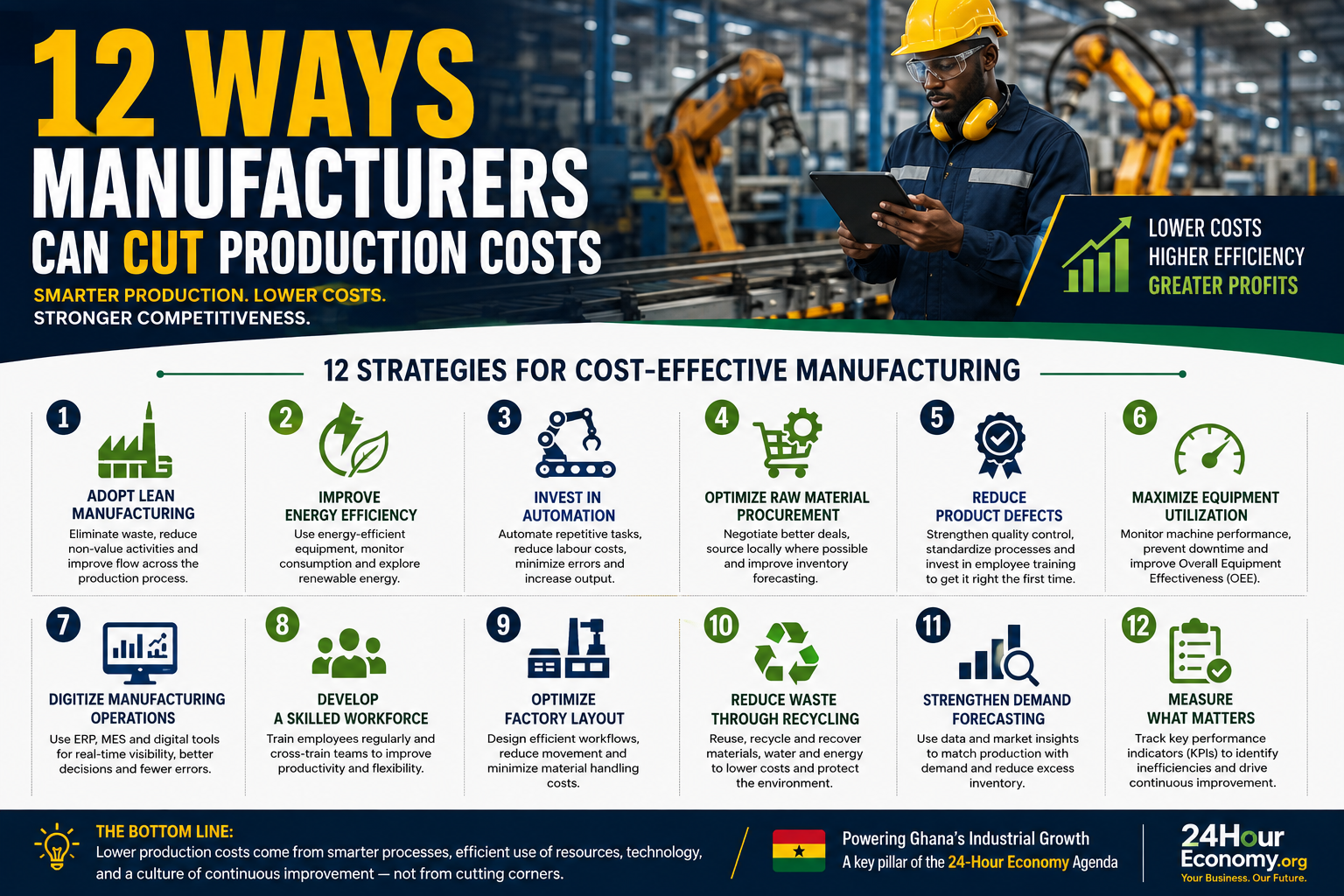
Across industries, businesses are leveraging AI to streamline operations, eliminate inefficiencies and significantly reduce operating costs without compromising service quality
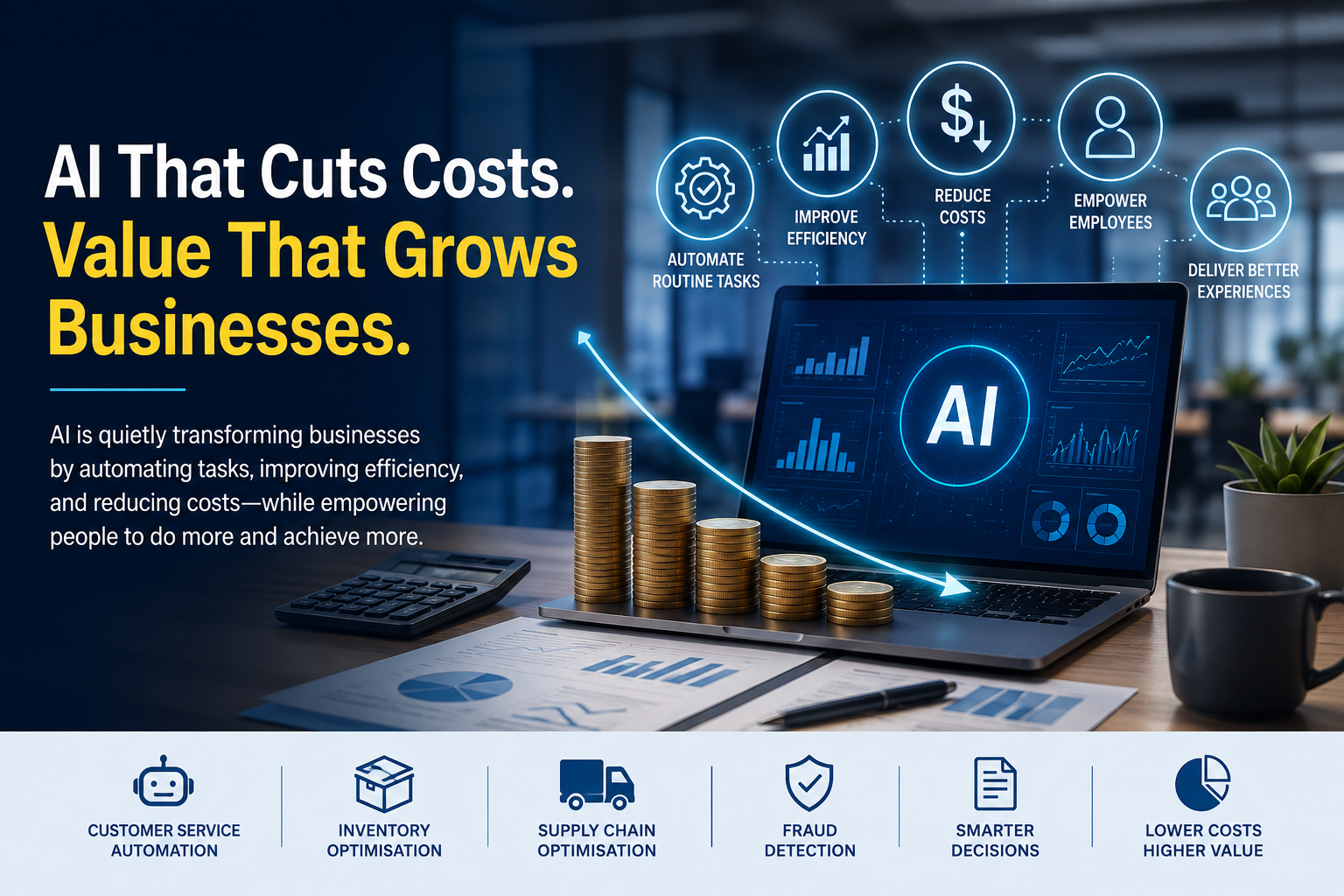
While headlines often focus on futuristic predictions about artificial intelligence, the most significant changes are happening behind the scenes. Across industries, businesses are leveraging AI to streamline operations, eliminate inefficiencies and significantly reduce operating costs without compromising service quality.
Here are some of the most impactful ways AI is helping organisations lower costs while improving performance.
1. Automating Routine Administrative Tasks
Administrative work consumes thousands of employee hours each year. AI-powered systems can automate repetitive tasks such as:
- Data entry
- Invoice processing
- Payroll administration
- Expense management
- Appointment scheduling
- Document classification
- Email sorting and prioritisation
By reducing manual intervention, businesses lower labour costs, minimise errors, and allow employees to focus on higher-value work.
Cost Savings:
- Reduced overtime
- Fewer administrative staff required for repetitive tasks
- Lower error correction costs
2. Customer Service Automation
AI chatbots and virtual assistants now handle a large percentage of routine customer enquiries.
Instead of hiring additional customer service representatives, businesses can use AI to provide:
- 24/7 customer support
- Instant responses
- Order tracking
- Frequently Asked Questions
- Appointment booking
- Basic troubleshooting
Human agents then concentrate on complex customer issues.
Cost Savings:
- Lower customer support costs
- Reduced call centre staffing requirements
- Shorter response times leading to higher customer satisfaction
3. Predictive Maintenance
Manufacturers, transport operators, mining companies, utilities and logistics firms use AI to monitor equipment in real time.
AI analyses sensor data to predict when machinery is likely to fail before breakdowns occur.
Instead of expensive emergency repairs, companies perform maintenance only when necessary.
Cost Savings:
- Reduced equipment downtime
- Lower repair expenses
- Extended asset lifespan
- Improved production efficiency
4. Inventory Optimisation
Holding excess inventory ties up capital while stock shortages lead to lost sales.
AI forecasts demand using:
- Historical sales
- Seasonal trends
- Economic indicators
- Customer buying behaviour
- Weather patterns
This enables businesses to maintain optimal inventory levels.
Cost Savings:
- Lower warehouse costs
- Reduced obsolete stock
- Improved cash flow
- Fewer emergency purchases
5. Supply Chain Optimisation
Supply chain disruptions can significantly increase operating expenses.
AI helps businesses:
- Select the most efficient suppliers
- Predict shipping delays
- Optimise delivery routes
- Forecast procurement needs
- Reduce transportation costs
Cost Savings:
- Lower fuel consumption
- Reduced logistics expenses
- Fewer stockouts
- Better supplier negotiations
6. Energy Management
AI-powered energy management systems analyse electricity usage and automatically adjust:
- Lighting
- Air conditioning
- Manufacturing equipment
- Office energy consumption
Factories and commercial buildings can substantially reduce electricity costs.
Cost Savings:
- Lower utility bills
- Improved sustainability
- Reduced carbon emissions
7. Smarter Marketing
Marketing budgets are often wasted on campaigns that reach the wrong audience.
AI analyses customer data to identify:
- High-value prospects
- Purchase behaviour
- Campaign effectiveness
- Customer preferences
Businesses spend less while achieving better marketing results.
Cost Savings:
- Reduced advertising waste
- Higher conversion rates
- Improved return on marketing investment
8. Fraud Detection
Banks, insurance companies, fintech firms, and retailers use AI to detect suspicious transactions within seconds.
AI continuously analyses millions of transactions to identify unusual behaviour.
Cost Savings:
- Reduced financial losses
- Lower fraud investigation costs
- Improved regulatory compliance
9. Human Resources Efficiency
Recruitment can be expensive and time-consuming.
AI assists HR teams by:
- Screening CVs
- Scheduling interviews
- Answering candidate questions
- Predicting employee turnover
- Identifying training needs
This shortens hiring cycles and improves workforce planning.
Cost Savings:
- Lower recruitment costs
- Faster hiring
- Reduced employee turnover
10. Financial Planning and Forecasting
Finance departments use AI to automate:
- Budget forecasting
- Cash flow analysis
- Expense monitoring
- Financial reporting
- Risk assessment
Executives receive timely insights instead of waiting weeks for manual reports.
Cost Savings:
- Better cash management
- Reduced reporting time
- More accurate budgeting
- Earlier identification of financial risks
11. Software Development and IT Operations
AI coding assistants and intelligent IT monitoring tools help technology teams:
- Generate code
- Detect software bugs
- Monitor servers
- Predict system failures
- Respond automatically to routine incidents
This accelerates development while reducing maintenance costs.
Cost Savings:
- Faster software delivery
- Reduced downtime
- Lower infrastructure management costs
12. Document Processing
Businesses handle thousands of documents every month, including contracts, invoices, purchase orders, claims and compliance records.
AI can:
- Extract key information
- Verify documents
- Categorise files
- Detect inconsistencies
- Route approvals automatically
Industries such as banking, insurance, healthcare, and government are already benefiting from these capabilities.
Cost Savings:
- Faster document processing
- Reduced manual labour
- Improved compliance
- Fewer processing errors
AI Is a Cost Optimiser, Not Just an Automation Tool
The greatest value of AI lies not merely in replacing manual tasks but in helping organisations operate more efficiently. By reducing repetitive work, improving accuracy and enabling faster decisions, AI lowers costs while allowing employees to focus on innovation, customer relationships and strategic growth.
Businesses that embrace AI thoughtfully are finding that its return on investment extends beyond direct labour savings. Reduced waste, fewer errors, smarter forecasting, optimised supply chains, improved customer experiences and better resource utilisation all contribute to stronger financial performance.
Looking Ahead
For businesses in Ghana and across Africa, AI presents a practical opportunity to improve competitiveness. Whether deployed in manufacturing, agriculture, financial services, logistics, retail, or the public sector, AI can help organisations do more with existing resources while preparing for sustainable growth in an increasingly digital economy.
The organisations that realise the greatest benefits will not necessarily be those investing the most in AI, but those that identify specific business challenges where intelligent automation can deliver measurable cost savings and long-term value.
 Export, Trade & Logistics