For Africa, the opportunity is to translate these international inspection principles into effective national systems that protect consumers, improve road safety and reduce the environmental impact of imported vehicles.
A New International Framework for Used Vehicle Safety
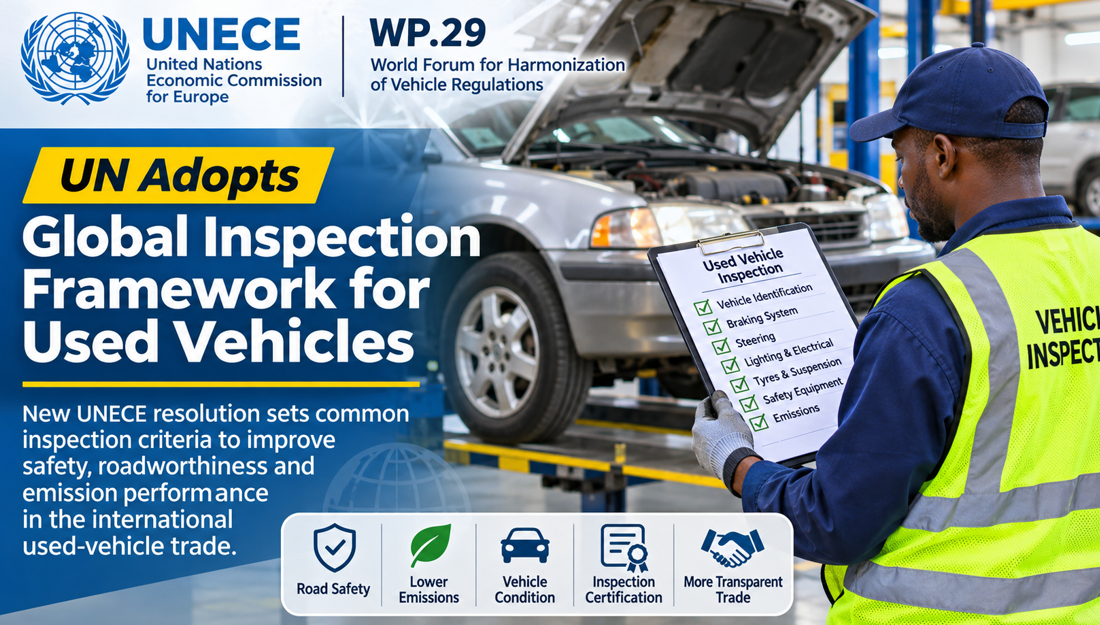
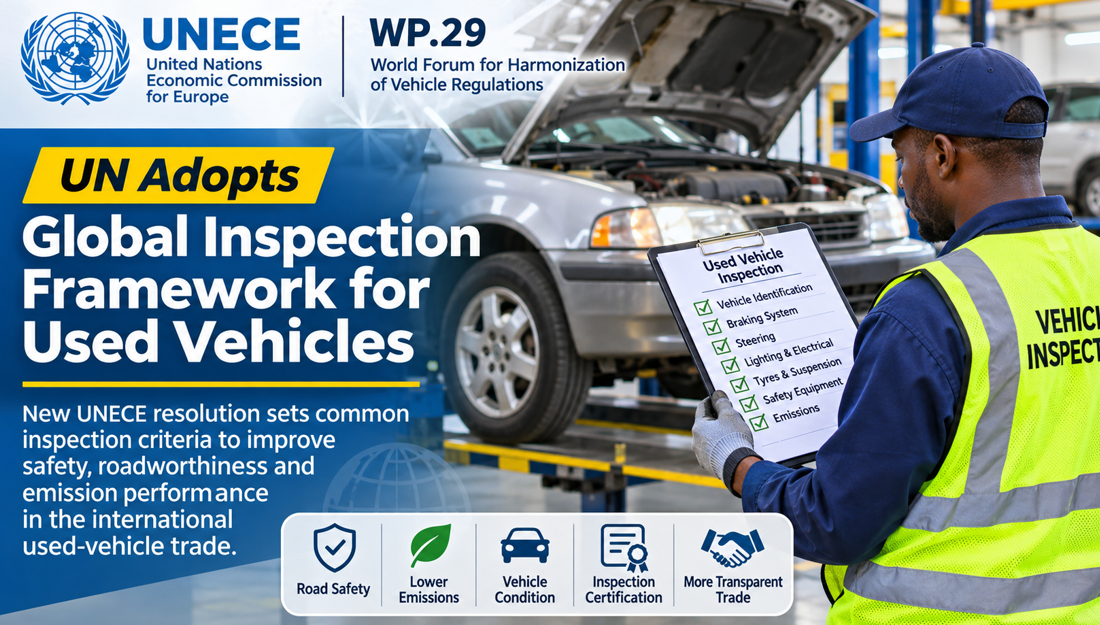
The United Nations World Forum for Harmonization of Vehicle Regulations (WP.29) has adopted a new Resolution on the Inspection Criteria for Used Vehicles, establishing an international reference framework to improve the safety and environmental performance of used vehicles traded across borders.
Announced by the United Nations Economic Commission for Europe (UNECE) on 18 November 2026, the resolution represents an important development for the global automotive trade, particularly for low- and middle-income countries that depend significantly on imported used vehicles.
The framework seeks to address concerns about the circulation of used vehicles with unsafe mechanical conditions, inadequate safety systems and excessive pollutant emissions.
Rather than prescribing which vehicles countries must accept or reject, the resolution provides governments with internationally harmonised inspection guidance to support their national vehicle importation policies. Countries retain responsibility for determining their own import policies and acceptance criteria.
What Does the New UN Framework Cover?
The resolution establishes minimum inspection criteria covering vehicle identification, roadworthiness, safety systems and environmental performance.
Its inspection framework covers the following areas:
Vehicle identification: Verification of chassis numbers, VIN and vehicle identity.
Braking systems: Assessment of service brakes, emergency brakes, parking brakes and braking efficiency.
Steering systems: Examination of steering components, steering play and wheel alignment.
Visibility: Inspection of windscreens, mirrors, wipers and the driver's field of vision.
Lighting and electrical systems: Examination of headlights, indicators, brake lights, reflectors, wiring and batteries.
Axles, wheels, tyres and suspension: Assessment of mechanical condition and roadworthiness.
Chassis and bodywork: Examination of the vehicle frame, structural components and body condition.
Safety equipment: Inspection of seatbelts, restraint systems, warning devices and other applicable safety equipment.
Environmental performance: Assessment of exhaust emissions, noise and other environmental concerns.
Electric and hybrid vehicles: Supplementary inspection criteria covering traction batteries, electric motors, electrical wiring and associated safety systems.
Introduction of a Recommended Certificate of Roadworthiness
One important feature of the framework is its approach to inspection certification and communication between exporting and importing parties.
Inspector's signature and tamper-proof seal.
The framework recommends that the communication form be transmitted securely to the importer or importing entity.
This approach could improve transparency, traceability and confidence in the international used-vehicle trade.
What Does This Mean for Africa and Ghana?
The adoption is particularly relevant to African countries, where imported used vehicles constitute an important part of the automotive market.
For countries such as Ghana, the framework provides an opportunity to strengthen vehicle inspection procedures, improve road safety and establish more consistent approaches to assessing vehicles before importation.
Ghana's Vehicle Pre-Export Verification of Conformity (PVoC) programme, administered under the Ghana Standards Authority, is an important part of the country's efforts to improve the quality and safety of imported vehicles.
The new UNECE resolution provides a useful international technical reference for reviewing inspection procedures, inspection equipment, certification processes and information-sharing arrangements.
However, the resolution does not automatically replace Ghana's national standards or establish new import restrictions. Individual governments retain responsibility for their own vehicle importation policies and acceptance requirements. [1]
Implications for Vehicle Exporters, Importers and Inspection Agencies
The development has implications across the international automotive supply chain.
Vehicle exporters may increasingly need to demonstrate the roadworthiness and environmental condition of vehicles before shipment.
Importers and dealers stand to benefit from more transparent inspection information, helping them assess vehicle condition before completing transactions.
Inspection and conformity assessment agencies will need to pay attention to inspection methodology, technical competence, testing equipment and reliable certification systems.
Governments and regulatory authorities can use the framework as a reference when strengthening national vehicle inspection and importation policies.
As global vehicle fleets continue to evolve, particularly with the growth of hybrid and electric vehicles, the inclusion of supplementary inspection provisions for these technologies is also significant.
A Step Towards Safer International Automotive Trade
The adoption of the UNECE Resolution on the Inspection Criteria for Used Vehicles marks an important step towards a more transparent and safety-conscious international used-vehicle market.
For Africa, the opportunity is to translate these international inspection principles into effective national systems that protect consumers, improve road safety and reduce the environmental impact of imported vehicles.
For the automotive industry, the message is clear: vehicle condition, safety and environmental performance must become increasingly important considerations in international used-vehicle trade.
Sources and Further Reading
[1] United Nations Economic Commission for Europe (UNECE)
New inspection framework to improve used vehicles' safety and environmental performance worldwide.
Published: 18 November 2026.
https://unece.org/media/press/418573
[2] UNECE – Original Technical Document
ECE/TRANS/WP.29/2026/10: Proposal for a Resolution on the Inspection Criteria for Used Vehicles.
Submitted by the Informal Working Group on Safer and Cleaner Used and New Vehicles.
https://unece.org/sites/default/files/2026-11/ECE-TRANS-WP.29-2026-10e.pdf
[3] UNECE – WP.29 199th Session
Official meeting records and working documents, including ECE/TRANS/WP.29/2026/10.
https://unece.org/transport/events/wp29-world-forum-harmonization-vehicle-regulations-199th-session
Editorial note: This article is based on the UNECE announcement of 18 November 2026 and the associated technical documentation. The resolution provides international inspection guidance; national authorities retain control over their vehicle importation policies and acceptance requirements.
Published by: AutoConnectGH – Automotive Trade, Industry and Regulatory News.
 Export, Trade & Logistics