Learn how Ghana's new Vehicle Dealer Information System (VEDIS) works, the seven-step vehicle import approval process, vehicle homologation requirements, and what the reforms mean for importers, dealers, insurers and logistics companies.
As Ghana prepares to modernise its automotive import ecosystem, the Ghana Standards Authority (GSA) is introducing a new vehicle import regime that will fundamentally change how new vehicles are approved, imported, verified and released into the country.
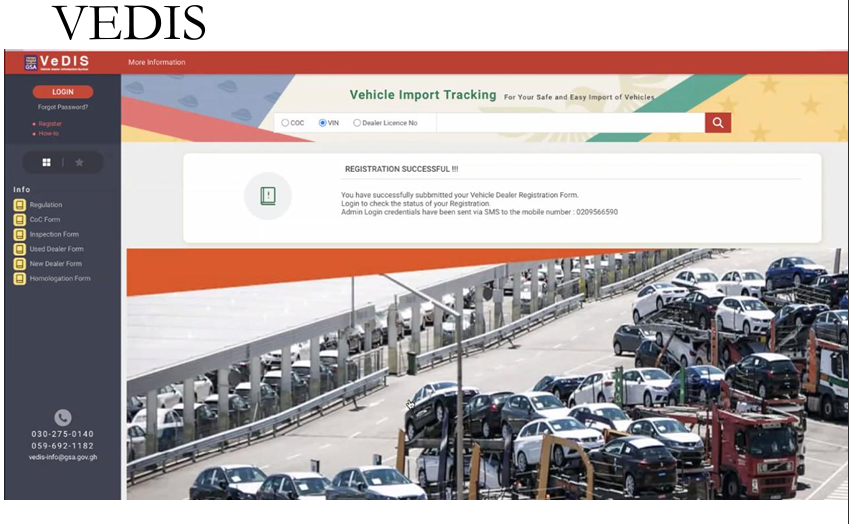
At the centre of the reforms is the Vehicle Dealer Information System (VEDIS)—a digital platform designed to manage importer registration, vehicle model homologation, documentation and compliance verification.
The initiative forms part of broader efforts to improve road safety, consumer protection, product quality assurance and trade facilitation while aligning Ghana's automotive sector with international standards.
What is VEDIS?
The Vehicle Dealer Information System (VEDIS) is an online regulatory platform developed by the Ghana Standards Authority to manage vehicle import approvals electronically.
The platform enables:
- Registration of vehicle importers and dealerships
- Vehicle model homologation
- Submission of approval documents
- Tracking imported vehicle models
- Verification at Ghana's ports
- Integration with customs clearance processes
Rather than relying on paper documentation, importers will upload required approvals into VEDIS before vehicles arrive in Ghana.
The Seven-Step Import Process
Under the new regime, every importer of new vehicles will follow a structured approval process.
Step 1: Register as a Vehicle Importer
Every importer must first register with the Ghana Standards Authority and create an account on the Vehicle Dealer Information System (VEDIS).
This creates an official database of authorised vehicle importers operating in Ghana.
Step 2: Homologate Every Vehicle Model
Before importing any vehicle model, the importer must complete Vehicle Model Homologation.
Homologation is the technical approval process through which GSA confirms that a vehicle model complies with Ghana's adopted safety, environmental and technical standards.
Unlike PVoC, homologation applies to the vehicle model itself, not individual vehicles.
Step 3: Upload Approval Documents
Once a model has been approved, GSA uploads the homologation approval documents into VEDIS.
For low-risk importers, provisional homologation documentation may be issued to facilitate business continuity while final approvals are completed.
Step 4: Import the Vehicles
After approval, importers may ship vehicle units into Ghana together with all required shipping and customs documentation.
Because the vehicle model has already been approved, the clearance process becomes significantly more streamlined.
Step 5: Submit Documents at the Port
Upon arrival, importers submit:
- Homologation approval
- Shipping documents
- Import documentation
to GSA inspectors stationed at the port.
Step 6: Physical Verification
GSA inspectors verify that:
- the imported vehicle matches the approved model;
- the Vehicle Identification Number (VIN) corresponds with submitted documentation;
- the specifications align with the homologated model stored in VEDIS; and
- all compliance requirements have been satisfied.
Only compliant vehicles proceed to customs clearance.
Step 7: Clearance and Release
Following successful verification, GSA authorises the release of the vehicle through the Integrated Customs Management System (ICUMS).
Once released, the vehicle can continue through the remaining registration processes.
Why the Reform Matters
The Vehicle Import Regime Reform aims to create a more transparent, efficient and secure vehicle import ecosystem.
Expected benefits include:
- Improved road safety through compliance with recognised standards.
- Better consumer protection by preventing the importation of unsafe vehicles.
- Faster customs processing through digital verification.
- Reduced documentation fraud.
- Enhanced traceability of imported vehicles.
- Improved regulatory oversight.
- Greater confidence for vehicle financiers, insurers and fleet operators.
Who Will Be Affected?
The reforms will directly impact:
- Vehicle importers
- Automobile dealerships
- Freight forwarders
- Shipping lines
- Customs agents
- Vehicle financing companies
- Insurance companies
- Logistics providers
- Fleet operators
- Government regulatory agencies
- Businesses involved in vehicle imports are encouraged to familiarise themselves with the new procedures ahead of full
implementation.
A Digital Future for Ghana's Automotive Industry
The introduction of VEDIS represents a significant step in Ghana's efforts to digitise regulatory processes within the automotive sector. By combining digital approvals, model homologation and port-based verification, the system is expected to reduce processing delays, improve compliance and strengthen confidence in Ghana's vehicle import market.
For businesses, early preparation will be essential. Importers should ensure they are registered on VEDIS, understand the homologation requirements for their vehicle models and maintain complete documentation for every shipment.
As Ghana continues implementing broader vehicle standards and Pre-Verification of Conformity (PVoC) measures, VEDIS is expected to become a critical component of the country's modern automotive regulatory framework.
By 24HourBusiness.org
 Export, Trade & Logistics